
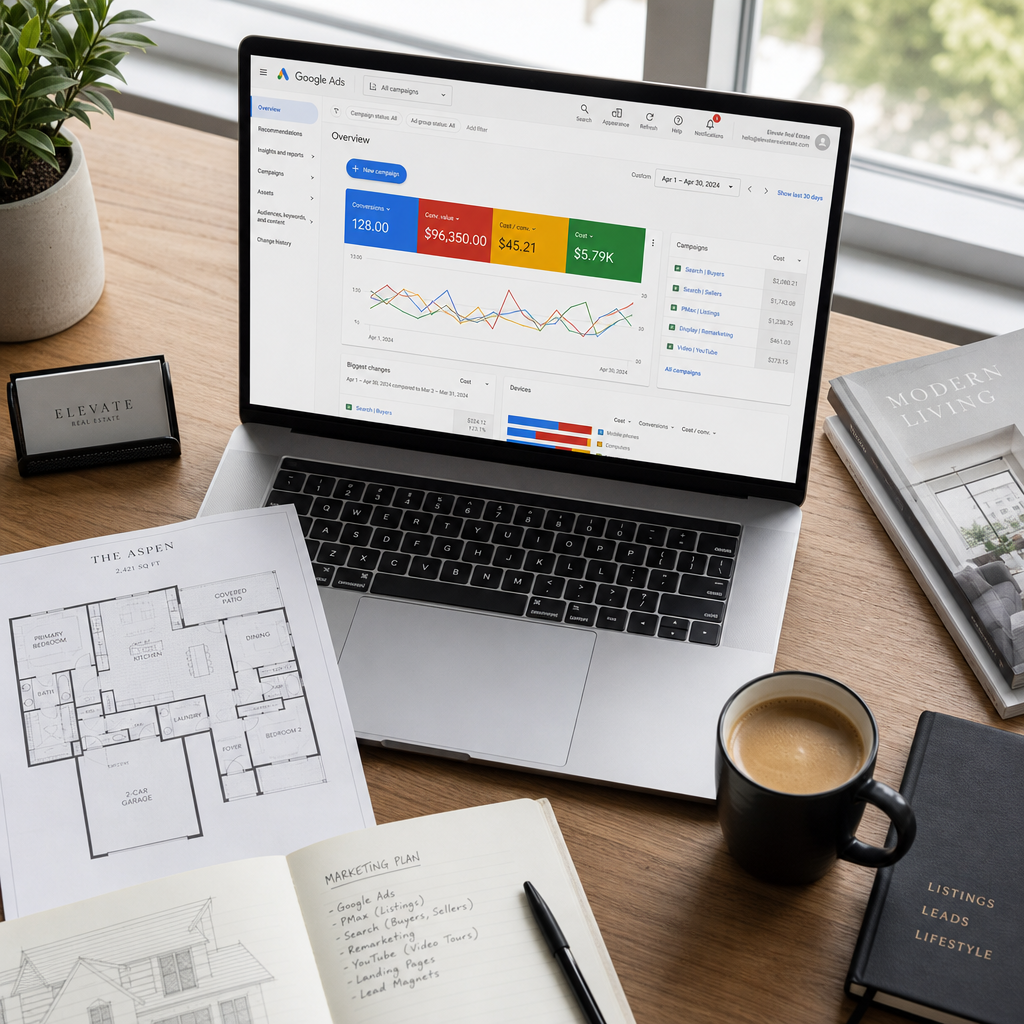
Most real estate agencies in Australia are either paying too much for Google Ads management, or flying blind without any. The middle ground, where you get professional campaign setup, ongoing optimisation, and measurable results for a fixed monthly fee starting at $99, is exactly where affordable Google Ads management Australia specialists like Aus Promotion operate. This article breaks down what that price point actually includes, why it works for real estate agencies, and how to judge whether a flat-fee management model is genuinely delivering value or just burning your budget quietly.
Table of Contents
- Quick Takeaways
- What $99 Per Month Actually Covers
- Why Real Estate Agencies Benefit Most
- Search, Display, YouTube, and Remarketing Explained
- Comparison: Management Models Side by Side
- What Separates a $99 Plan from a Cheap Plan
- How Data-Driven Optimisation Works at This Price
- Frequently Asked Questions
- References
Quick Takeaways
| Key Insight | Explanation |
|---|---|
| $99/month is a management fee, not your ad spend | Your ad budget goes directly to Google. The $99 covers campaign setup, monitoring, and optimisation by a professional manager. |
| Real estate agencies need multiple ad formats | Search ads capture buyers actively searching. Display and YouTube ads build brand awareness with landlords and vendors earlier in their decision cycle. |
| Remarketing is non-negotiable for property leads | The average property decision cycle is weeks, not days. Remarketing keeps your agency in front of warm prospects who have already visited your site. |
| Percentage-of-spend models often penalise small budgets | An agency spending $500/month on ads would pay $100 or more in management fees under a 20% model. A flat $99 fee is mathematically better for lean budgets. |
| Campaign setup quality determines ROI from day one | Correct keyword match types, negative keyword lists, and geo-targeting set at launch prevent wasted spend before a single dollar is spent on clicks. |
| Google Ads delivers trackable, attributable leads | Unlike print or billboard advertising, every call, form fill, and property enquiry from a Google Ad can be traced back to a specific campaign and keyword. |
| Affordable management does not mean set-and-forget | A quality $99 plan includes regular bid adjustments, ad copy testing, and performance reporting. Absence of these signals a low-effort management arrangement. |
What $99 Per Month Actually Covers
The first thing to clear up is the distinction between the management fee and the ad spend. When a service like Aus Promotion charges $99 per month, that fee pays for the human expertise running one campaign. Your actual Google Ads budget sits entirely separately and goes directly to Google. This matters because it means every dollar you allocate to advertising reaches the platform, not a middleman’s margin.
In practice, a properly structured $99 management plan covers initial campaign architecture, which includes keyword research specific to your suburb or region, ad group structure, match type selection, and negative keyword lists. A common mistake by agencies trying to DIY their Google Ads is using broad match keywords with no negatives, which burns through budget on irrelevant searches within the first week.
Beyond setup, ongoing management at this price point includes bid strategy adjustments as competition shifts, ad copy rotation to identify which messages generate more clicks, and quality score monitoring. Google’s Quality Score directly affects your cost per click. A campaign with a Quality Score of 8 versus 4 on the same keyword can cost dramatically less per click for exactly the same ad position.
Pro tip: Ask any Google Ads manager you are considering to show you an example of a negative keyword list they built for a property client. If they cannot produce one, they are not doing real optimisation work.

Why Real Estate Agencies Benefit Most
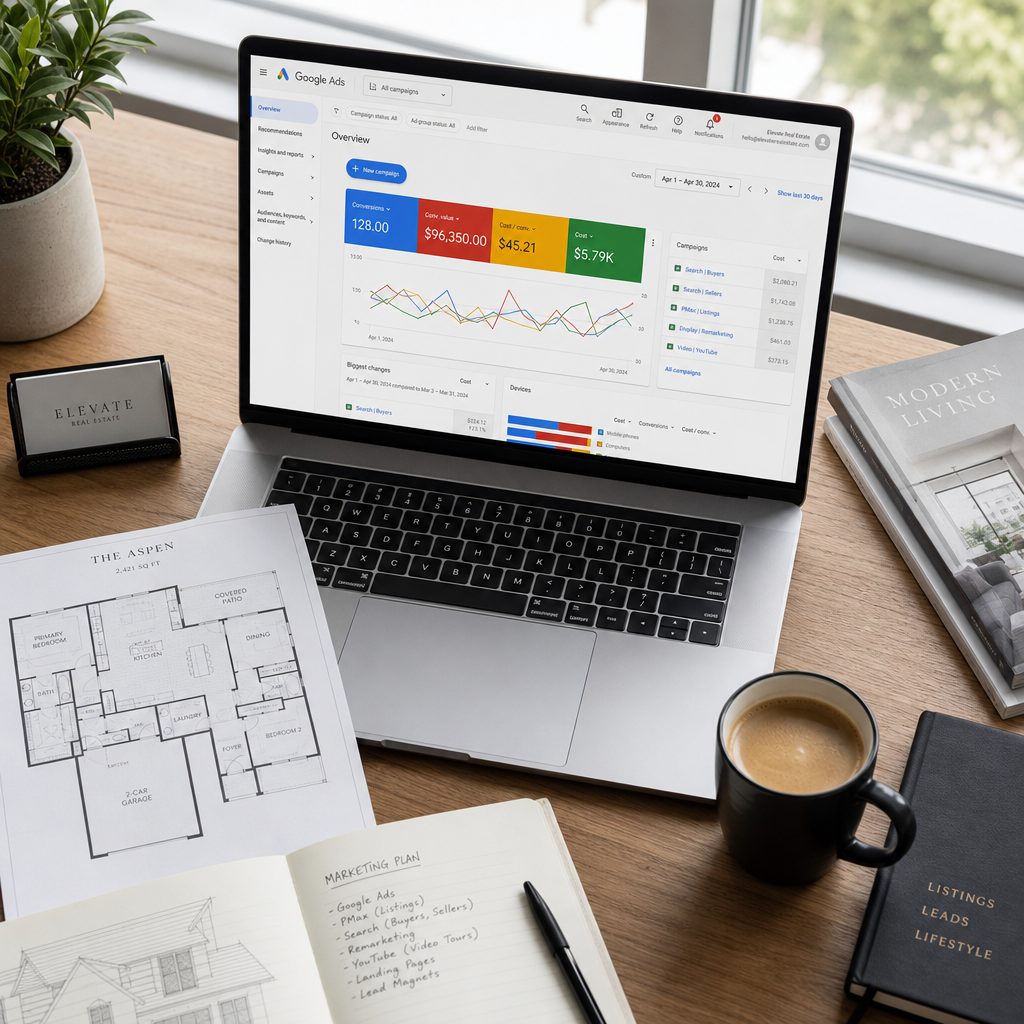
Real estate is one of the highest-value lead categories on Google Ads, and that cuts both ways. The potential return per converted lead, whether a property listing, a rental management contract, or a buyer consultation, is significant. But the cost of mismanaged campaigns is equally significant, because poorly targeted clicks in real estate can cost $1 to $3 each with zero conversion to show for it.
Real estate agencies in Australia and New Zealand face a specific competitive challenge. The major portals like Domain and realestate.com.au dominate organic search results, which makes paid search one of the few channels where a local agency can appear at the top of results for high-intent searches like “property management [suburb]” or “sell my house [city]” without competing for organic rankings against platforms with hundred-million-dollar SEO budgets.
Local Market Targeting That Actually Works
Google Ads geo-targeting allows campaigns to run exclusively within specific postcodes, suburbs, or radius distances from a point. For a boutique real estate agency operating in a defined territory, this means ad spend is never wasted on clicks from people outside your service area. This level of precision is simply not available in print, radio, or letterbox campaigns.
The data consistently shows that hyper-local targeting in real estate reduces cost per lead significantly. When someone searches “real estate agent Parramatta” or “property management Christchurch”, they are signalling intent that is both high-value and geographically specific. A well-structured campaign captures exactly that audience.
Multiple Touchpoints Across the Property Decision Cycle
A vendor deciding to sell their home does not typically search Google once and immediately call an agency. They research for weeks, visiting multiple sites, comparing agents, reading reviews. A Google Ads strategy that uses only search ads misses the opportunity to stay present during that research phase. Display and remarketing campaigns fill that gap by keeping your agency’s brand visible as potential vendors browse other websites.
Pro tip: Run a separate remarketing campaign targeting visitors who spent more than 60 seconds on your agency’s property appraisal page. These are high-intent prospects who almost committed and need one more nudge, not a generic banner ad.
Search, Display, YouTube, and Remarketing Explained
A well-rounded Google Ads strategy for real estate uses four distinct campaign types, and understanding what each does prevents the mistake of running only one format and wondering why results plateau.
Search Ads: Capturing Active Intent
Search ads appear when someone types a specific query into Google. This is the highest-intent format because the user has already decided they want something. For real estate, the strongest performing search campaigns target transactional terms like “real estate agent near me”, “sell my property [suburb]”, “rental property management [city]”, and similar phrases where the searcher is ready to take action. Search ads reward relevance heavily. An ad that closely matches the search query and lands on a highly relevant page converts at a significantly higher rate than a generic ad pointing to a homepage.
Display Ads: Building Recognition Before the Search Happens
Display ads are visual banners that appear across Google’s network of over two million websites and apps. For real estate, display campaigns work best for brand awareness among an audience that may not be actively searching yet but fits the profile of a future vendor or landlord. Targeting options include demographic filters like age, household income, and homeowner status, which allows a real estate agency to reach the right profile of person even before they start their property search.
YouTube Video Ads: Presence Without a Big Budget
YouTube advertising through Google Ads allows real estate agencies to run short ads before property-related content. The critical advantage is cost. A skippable YouTube ad costs per view, and viewers who skip in the first five seconds cost nothing. For an agency wanting to build awareness in a local market without committing to television advertising budgets, YouTube offers genuinely affordable reach.
Remarketing: Following Warm Prospects Intelligently
Remarketing campaigns serve ads specifically to people who have already visited your website. The conversion rate for remarketing traffic is consistently higher than cold traffic because the audience already knows your brand. For a real estate agency, a prospect who visited your “sell your home” page but did not fill out an appraisal request form is a warm lead that a remarketing campaign can bring back. Without remarketing, that prospect simply disappears.

Comparison: Management Models Side by Side
Not all Google Ads management is structured the same way. The three most common models are flat monthly fee, percentage of ad spend, and one-time setup with no ongoing management. Each has different implications for a real estate agency with a lean marketing budget.
| Management Model | How It Works | Best For Real Estate Agencies |
|---|---|---|
| Flat Monthly Fee (e.g., $99/month) | Fixed management cost for one campaign regardless of ad spend. All ad budget goes directly to Google. Manager is incentivised to improve performance, not inflate spend. | Agencies with budgets under $300/month who want predictable costs and genuine optimisation focus. |
| Percentage of Ad Spend (typically 10-20%) | Manager charges a percentage of whatever you spend on ads. As your budget grows, their fee grows automatically. This creates an incentive to encourage higher spend. | Larger agencies spending $5,000 or more per month where the complexity genuinely justifies higher management fees. |
| One-Time Setup, No Ongoing Management | Campaign is built once and left running. No regular bid adjustments, no negative keyword refinement, no ad copy testing. | Not recommended for real estate. Competitive markets require active management. A static campaign degrades in performance quickly. |
The flat fee model at $99 per month is objectively the most cost-effective structure for a real estate agency spending between $150 and $500 per month on Google Ads. A percentage-of-spend model at 20% on a $1,000 monthly budget would charge $200 in management fees, 50% more than the flat fee, for the same tasks.
What Separates a $99 Plan from a Cheap Plan
Price alone tells you nothing. A $99 management plan that includes genuine optimisation delivers far more value than a $50 plan that simply monitors a campaign without touching it. The question to ask is what the manager actually does each month for that fee.
A quality plan at the $99 per month price point should include initial keyword research specific to your market, campaign and ad group structure built around distinct services, negative keyword lists updated regularly, bid adjustments based on device, time of day, and location performance, and monthly reporting that shows actual metrics, not vanity numbers.
“The biggest waste in Google Ads is not a high cost per click. It is spending money on clicks that were never going to convert because the campaign was not structured correctly from the start.” — WordStream, Google Ads Performance Benchmarks Report
A common mistake is confusing an active Google Ads account with a managed Google Ads account. Many agencies set up a campaign, link their credit card, and consider the job done. Without someone actively monitoring search term reports, adjusting bids, and testing new ad copy, that campaign slowly accumulates wasted spend on irrelevant searches and competitor brand terms.
The specific activities that differentiate Aus Promotion’s approach from a set-and-forget arrangement include regular search term audits that add new negative keywords, conversion tracking verification to ensure leads are being counted accurately, and ad scheduling adjustments so ads run during the hours when your target audience is most likely to convert.
How Data-Driven Optimisation Works at This Price
The phrase “data-driven” gets used loosely in digital marketing, so it is worth being specific about what it means in the context of an affordable Google Ads management plan. Data-driven optimisation means making campaign decisions based on actual performance metrics rather than assumptions, and it is entirely achievable at the $99 per month price point.
Conversion Tracking as the Foundation
Before any optimisation is meaningful, conversion tracking must be set up correctly. For a real estate agency, conversions typically include phone calls from ads, form submissions for property appraisals, and clicks on a contact email. Without accurate conversion tracking, you are optimising blind. Every dollar saved or reallocated is a guess rather than a decision based on evidence.
In practice, conversion tracking setup takes a few hours at campaign launch and is the single highest-value technical task a Google Ads manager performs. Once tracking is live, the data tells you which keywords, ads, and landing pages are generating actual enquiries versus which ones are generating clicks that go nowhere.
Bid Strategy Decisions That Actually Move the Needle
Google offers multiple automated bid strategies, including Target CPA (cost per acquisition), Maximise Conversions, and Target ROAS (return on ad spend). The correct strategy depends on how much conversion data the campaign has accumulated. A common mistake is applying Target CPA to a new campaign with fewer than 30 conversions per month. Google’s algorithm needs data to optimise, and without it, automated bidding strategies perform worse than manual bidding.
For real estate agencies starting out, a manual CPC or Maximise Clicks strategy during the first 60 to 90 days of a campaign builds the data foundation needed to later switch to conversion-focused automated strategies effectively. This sequence, start manual, collect data, then automate, is a specific practice that distinguishes an experienced manager from someone who applies the same settings to every account.
Reporting That Answers Real Business Questions
Monthly reporting for a real estate agency should answer specific questions: How many property enquiry leads did we receive this month? What did each lead cost? Which suburbs or search terms generated the most leads? Are competitors bidding on our agency name? A report that shows only impressions and clicks without connecting back to actual lead volume is not useful reporting, it is noise.
Aus Promotion’s reporting structure connects campaign data to business outcomes. If your goal is more vendor appraisal requests, the report shows how many the campaign delivered and at what cost per lead. That transparency is what makes affordable management genuinely valuable rather than affordable in name only.
Pro tip: Request that your Google Ads manager share the Google Ads account at the admin level, not just send PDF reports. If they are reluctant to give you access to your own account data, that is a significant red flag about what the account actually contains.
Frequently Asked Questions
Does the $99 per month fee include my Google Ads budget?
No. The $99 per month is a management fee that covers one campaign setup, monitoring, and ongoing optimisation. Your Google Ads budget is separate and paid directly to Google. This means every dollar of your ad budget goes to your campaigns, not to management overhead.
How much should a real estate agency spend on Google Ads per month in addition to the management fee?
For a single-suburb real estate agency targeting both buyer and vendor leads, a starting ad budget of $500 to $1,000 per month is realistic. Agencies targeting multiple suburbs or wanting to run display and remarketing in addition to search campaigns typically see better results with $1,500 or more in monthly ad spend. The management fee remains $99 regardless of how much you spend on ads.
How long does it take to see results from a Google Ads campaign for real estate?
Search campaigns typically generate first enquiries within the first week of going live because the ads are responding to active search intent. However, meaningful performance data, enough to make informed optimisation decisions, usually requires four to eight weeks of running. Campaigns improve over time as negative keywords are refined and bid strategies are adjusted based on actual conversion data.
Can Google Ads work for a small real estate office competing against large franchise agencies?
Yes, and this is one of the strongest arguments for Google Ads specifically. Unlike organic search where domain authority accumulated over years gives large agencies a structural advantage, Google Ads is an auction. A small agency with a well-structured campaign, a relevant ad, and a targeted budget can appear above a national franchise in search results for a specific local term. The quality of the campaign matters more than the size of the brand behind it.
What is the difference between Google Search Ads and Google Display Ads for real estate?
Search ads appear on Google’s results page when someone actively types a related query. They capture demand that already exists. Display ads appear as banners across websites and apps within Google’s network. They create awareness with an audience that has not yet started searching. For real estate, search ads typically generate more immediate leads, while display ads build brand recognition that makes search ads more effective over time by increasing familiarity with your agency name before a prospect ever searches.
Is Google Ads or Facebook Ads better for generating real estate leads in Australia?
Both platforms serve different stages of the decision process. Google Ads is superior for capturing high-intent searches from people actively looking to sell, buy, or rent property right now. Facebook Ads can reach a wider audience based on demographic and interest targeting but typically at a lower intent level. For most real estate agencies in Australia and New Zealand, Google Ads delivers a higher quality lead because the search intent signal is explicit. Starting with Google Ads and adding Facebook Ads once the Google foundation is profitable is the approach that consistently produces better results than running both simultaneously on a limited budget.
Share your experience with Google Ads management for your real estate business in the comments below, we would like to know what has worked or what questions you still have about getting started.
References
- HubSpot Marketing Statistics covering paid search performance benchmarks and lead generation data
- Ahrefs Blog covering keyword research methodology and search intent analysis relevant to paid search campaigns
- Statista data on digital advertising spend in Australia and paid search market trends
- Forbes coverage of small business digital marketing strategies and cost-effective advertising approaches
- Moz Learning Centre covering search behaviour, click-through rates, and the relationship between paid and organic search visibility