
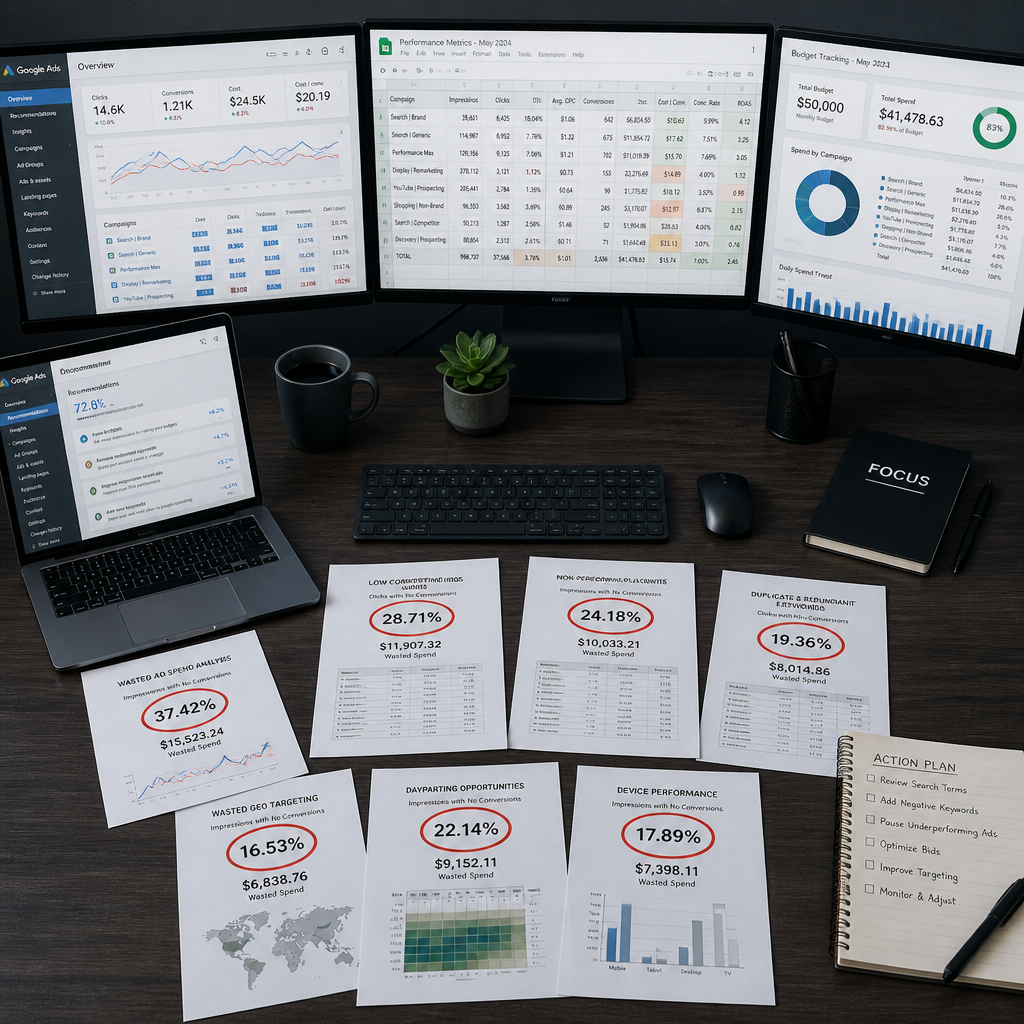
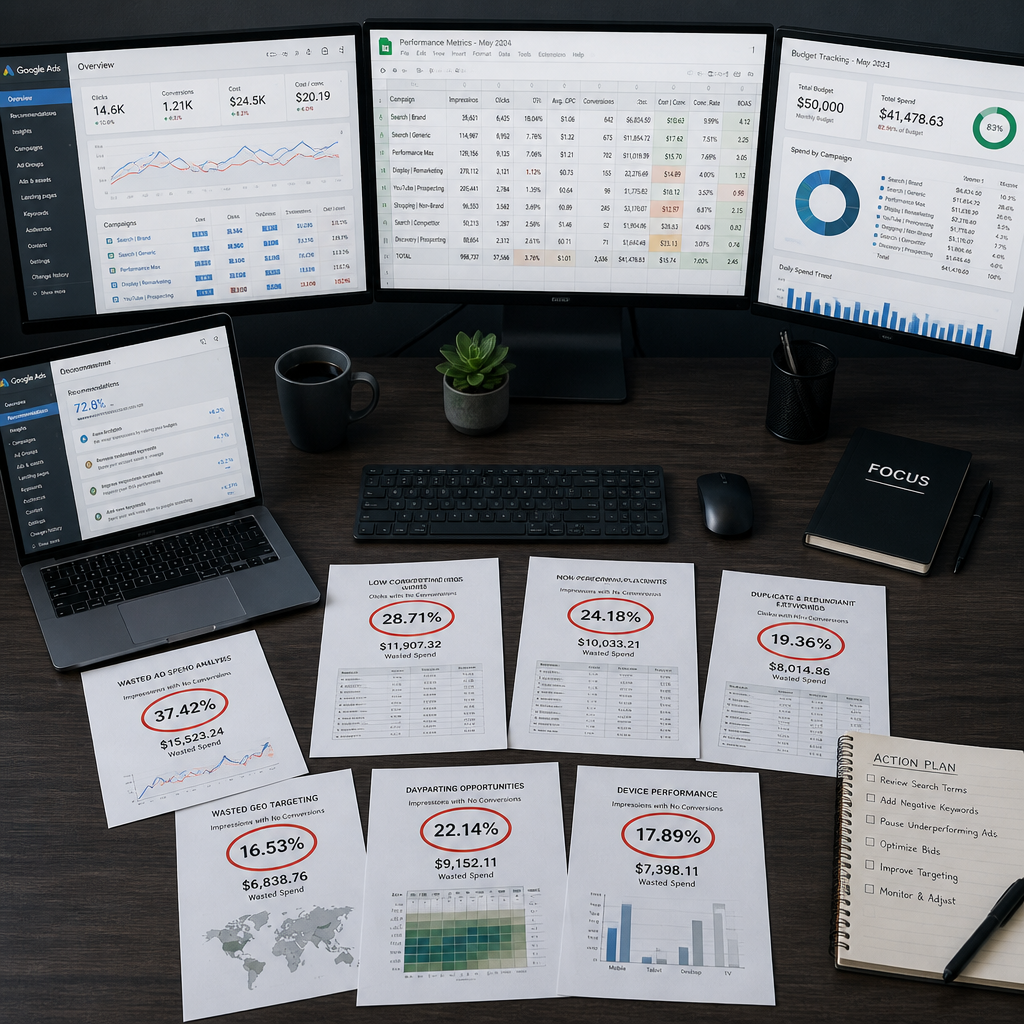
Real estate agents across Australia and New Zealand are burning through advertising budgets on Google Ads campaigns that were never set up correctly in the first place. WordStream data shows the average small business wastes up to 25% of its Google Ads spend on irrelevant clicks, and in real estate, where a single qualified lead can be worth thousands in commission, that waste adds up fast. The debate around Google Ads specialist vs DIY Australia is not really a debate at all once you see the numbers side by side. This article breaks down exactly where DIY campaigns fall apart and what a specialist actually does that you cannot replicate with a YouTube tutorial and a weekend.
Table of Contents
- Quick Takeaways
- The Real Cost of DIY Google Ads in Real Estate
- What a Google Ads Specialist Actually Does
- Where DIY Campaigns Consistently Fail
- Comparison: DIY vs Specialist vs Large Agency
- Why Real Estate Needs Specialist Google Ads Management
- How to Hire a Google Ads Manager for Real Estate
- Frequently Asked Questions
- References
Quick Takeaways
| Key Insight | Explanation |
|---|---|
| DIY campaigns lack negative keyword depth | Most DIY setups launch with fewer than 20 negative keywords. Specialists typically build lists of 200 or more, cutting wasted spend on irrelevant property searches immediately. |
| Specialists optimise ad copy, landing pages, and keyword relevance in tandem. DIY setups rarely address all three together. | |
| A specialist builds separate campaigns or ad groups for each. A single DIY campaign targets all of them the same way. | |
| Most DIY real estate campaigns run no remarketing at all. | |
| Wrong bid strategy choices in DIY campaigns can double your cost per lead overnight. | |
| Specialists adjust bids, test ad copy, and refine audiences weekly. DIY accounts typically go unchanged for months after launch. | |
The Real Cost of DIY Google Ads in Real Estate
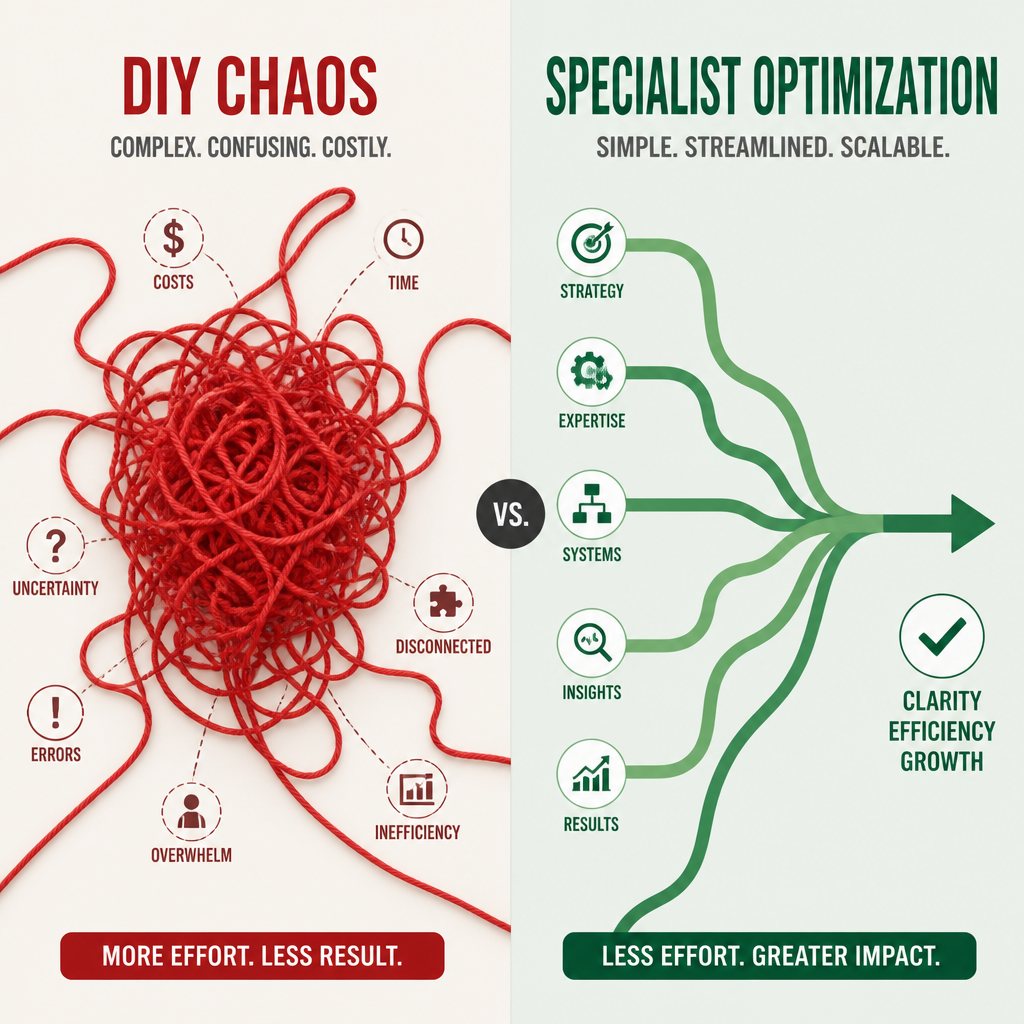
The upfront appeal of managing your own Google Ads account is obvious. You skip the management fee, you feel in control, and Google’s interface makes it look simple enough. In practice, that simplicity is a trap designed to get you spending quickly, not efficiently.
The data consistently shows that self-managed accounts spend more per conversion than professionally managed accounts. According to research published by WordStream, small businesses running Google Ads without professional help see click-through rates roughly half the industry average. In real estate, where average cost per click in Australia ranges from $0.50 to $4 depending on location and campaign type, that underperformance compounds fast.
There is also the hidden cost of your own time. Setting up a Google Ads campaign properly, not just clicking through the Smart Campaign wizard, takes 15 to 30 hours for an experienced practitioner. For a real estate agent managing listings, client relationships, and open homes, those hours have a very clear opportunity cost. Most agents who try DIY either rush the setup or abandon optimisation entirely within the first two months.
The Smart Campaign Problem
Google actively steers new advertisers toward Smart Campaigns. These are fully automated, require minimal setup, and are presented as ideal for small businesses. What Google does not emphasise is that Smart Campaigns optimise for Google’s revenue, not your lead quality.
A common mistake is accepting Google’s recommended settings during setup. Those recommendations include broad match keywords, automatic bidding, and expanded search partner networks, all of which increase spend with little corresponding increase in qualified real estate leads. A specialist starts by turning most of these defaults off.
Pro tip: If you have already run a Smart Campaign, pull the search terms report before cancelling it. That data reveals exactly what real estate queries people in your area are typing, which gives a specialist a head start on negative keyword lists and intent mapping.
What a Google Ads Specialist Actually Does
The phrase “manage your Google Ads” undersells what a competent specialist actually delivers. The work starts well before any ad goes live, and it never fully stops once the campaign is running.
Campaign Architecture and Structure
A specialist does not create one campaign and one ad group. For a real estate agency, a proper structure typically includes separate campaigns for buyer intent keywords, seller intent keywords, rental management, and branded searches. Each campaign has tightly themed ad groups, each ad group contains three to five ads in rotation, and each ad connects to a landing page built to convert that specific audience.
This structure matters because Google rewards relevance. When your keyword, ad copy, and landing page all use the same language and address the same intent, your Quality Score rises. Higher Quality Score means lower cost per click and better ad positions, which means more leads for the same budget.
Keyword Research With Commercial Intent in Mind
DIY advertisers typically pick 10 to 20 keywords that seem obvious, like “real estate agent Sydney” or “houses for sale Brisbane”. A specialist builds keyword lists from search volume data, competitor gap analysis, and intent signals. The difference is that a specialist also identifies which keywords indicate a person ready to act now versus someone doing early research. Bidding equally on both groups wastes budget on low-intent traffic.
Equally important is the negative keyword list. Negative keywords tell Google which searches should never trigger your ads. Without an aggressive negative keyword list, a real estate campaign in Australia will regularly serve ads to people searching for rental price histories, DIY conveyancing advice, or real estate licence courses. None of those people are your clients.
“The difference between a good Google Ads account and a bad one is usually not the budget. It is the negative keyword list and the match type strategy. Get those wrong and more money just means faster losses.” – Brett Curry, OMG Commerce, in interviews on paid search strategy
Conversion Tracking and Data Integrity
You cannot optimise what you cannot measure. A specialist sets up conversion tracking that captures actual lead events: form submissions, phone calls from ads, and live chat initiations. DIY accounts almost always run without proper conversion tracking, which means Google’s automated bidding strategies have no signal to optimise toward. They default to maximising clicks, not leads.
Pro tip: Ask any potential Google Ads provider to show you how they set up phone call tracking. If they use a static call extension with no dynamic number insertion, they are not tracking real estate calls accurately and their reported cost per lead figures will be misleading.
Where DIY Campaigns Consistently Fail
Having reviewed dozens of self-managed real estate Google Ads accounts, the failure points are remarkably consistent. They are not random mistakes. They are predictable gaps that appear almost every time an agent or agency attempts to manage campaigns without specialist knowledge.
Broad Match Keywords Without Controls
The most expensive and common DIY mistake in Australian real estate campaigns is running broad match keywords without paired negative keywords. Broad match tells Google to show your ads for any search it considers loosely related to your keyword. Without tight negative keyword controls, a campaign targeting “property management Gold Coast” will trigger ads for searches like “Gold Coast property manager salary” or “how to manage rental property yourself.”
These clicks cost the same as legitimate lead clicks. They just never convert. A specialist either avoids broad match in early campaigns or pairs it with a comprehensive negative keyword list built specifically for the real estate vertical.
Ad Copy That Describes Instead of Converts
DIY real estate ads almost always describe the agency rather than addressing the prospect’s problem. Copy like “Award-Winning Real Estate Agency Serving Sydney Since 2005” says nothing the prospect cares about in the moment of searching. A specialist writes ad copy around the buyer or seller’s primary fear, which in real estate is usually overpaying, underselling, or choosing the wrong agent.
Testing multiple headlines and descriptions is also standard specialist practice. Google’s Responsive Search Ads allow up to 15 headlines and 4 descriptions to be tested in combination. Most DIY accounts use three headlines and two descriptions and never change them after launch.

No Remarketing Strategy
Real estate decisions are not made in a single search session. A prospective seller researching “how to choose a real estate agent” will visit multiple agency websites over days or weeks before making contact. Remarketing allows you to stay visible to those warm prospects across Google’s Display Network and YouTube with follow-up messaging after their first visit.
Remarketing campaigns run at a fraction of the cost per click of search campaigns and convert at significantly higher rates because the audience already knows who you are. Almost no DIY real estate campaign includes any remarketing setup. This is one of the clearest ways a specialist earns their management fee back in the first month.
Comparison: DIY vs Specialist vs Large Agency
| Factor | DIY Campaign | Google Ads Specialist (e.g., Aus Promotion) | Large Digital Agency |
|---|---|---|---|
| Monthly management cost | $0 management fee, but high wasted ad spend | From $99/month, predictable and transparent | $800 to $3,000+/month, often percentage of ad spend |
| Campaign setup quality | Smart Campaign defaults, minimal structure | Full campaign architecture, real estate specific | Varies widely, often templated across industries |
| Negative keyword management | Rarely done, fewer than 20 keywords typically | 200+ negatives, updated monthly | Present but not always real estate specific |
| Remarketing setup | Almost never included | Standard inclusion across Display and Search | Included at higher tiers, often at extra cost |
| Reporting transparency | Raw Google Ads data, no interpretation | Plain-language reports focused on leads and cost | Polished dashboards, sometimes obscures real performance |
| Time investment required from you | 10 to 20 hours per month ongoing | Under 1 hour per month for review and feedback | 2 to 4 hours per month for meetings and approvals |
| Real estate industry knowledge | Depends entirely on the agent | Specialist knowledge of real estate buyer and seller intent | Generalist knowledge, real estate is one of many verticals |
Why Real Estate Needs Specialist Google Ads Management
Real estate is not like selling a product with a fixed price. The conversion path is long, the decision is emotional, and the search intent signals are complex. Someone searching “real estate agent Canberra” might be a seller wanting an appraisal, a buyer wanting an agent referral, or a competitor checking your ads. A specialist builds campaigns that filter for the right intent from the start.
There is also the competitive pressure specific to Australian and New Zealand real estate markets. Major portals like Domain and realestate.com.au dominate organic search, which makes paid search the most reliable channel for generating direct leads to your agency’s own website rather than feeding a third-party platform.
Multiple Campaign Types Working Together
A properly managed real estate Google Ads strategy does not rely on search ads alone. Search ads capture active intent. Display ads build brand recognition in your local market. YouTube video ads introduce your agents to prospective sellers before they start actively searching. Remarketing closes the loop by re-engaging anyone who visited your site but did not make contact.
Running all four campaign types in a coordinated strategy is what creates multiple customer touchpoints. DIY campaigns almost always run search ads only, which means they only capture people already at the decision stage and miss everyone in the consideration phase.
Local Market Targeting Precision
Real estate is inherently local. A specialist configures geographic targeting at the suburb or postcode level, adjusts bids based on proximity to your office or core farm area, and excludes locations where you do not operate. DIY campaigns frequently target entire cities or states, burning budget on areas the agency cannot actually service.
Ad scheduling is similarly precise in a specialist’s hands. Real estate search activity peaks on weekday evenings and weekend mornings. Scheduling your budget to run harder during these windows and lighter during low-activity periods is a standard optimisation most DIY campaigns never implement.
How to Hire a Google Ads Manager for Real Estate
When you decide to hire a Google Ads manager for real estate, the decision is not simply about price. The cheapest option and the most expensive option both frequently disappoint. What matters is whether the person or team has direct experience with real estate campaigns and can show you results from comparable clients.
Questions to Ask Before Signing Anything
Ask any prospective Google Ads manager to walk you through how they would structure a campaign for a real estate agency in your market. If they cannot immediately describe separate campaigns for buyer intent and seller intent, with different landing pages and different key performance indicators for each, they are not the right fit for a real estate business.
Ask specifically about conversion tracking. Ask how they report on cost per lead, not cost per click. Cost per click is a vanity metric for real estate. Cost per qualified lead is the number that matters, and a good specialist will know the difference without being prompted.
What Affordable Management Actually Looks Like
Affordable does not mean cutting corners on campaign quality. Providers like Aus Promotion offer professional Google Ads management for real estate from $99 per month, which covers campaign setup, ongoing optimisation, and reporting. That fee is recovered quickly when it replaces even a single month of wasted DIY spend on irrelevant clicks.
The key distinction from large agency models is transparency. With a specialist focused on real estate, you are not paying for account managers, creative directors, and strategy decks. You are paying for someone to actively manage the part of your advertising that generates leads. That focus keeps costs down and accountability high.
Pro tip: Before hiring any Google Ads manager, request ownership of the Google Ads account in your own Google account. Some agencies retain account ownership, which means if you leave, you lose all historical data and campaign settings. Always own your own data.
Frequently Asked Questions
How much does a Google Ads specialist cost in Australia for real estate?
Management fees for Google Ads specialists in Australia range from $99 per month for focused specialists like Aus Promotion through to $3,000 or more per month for large full-service agencies. For most real estate agencies spending between $500 and $3,000 per month on ad spend, a focused specialist charging $99 to $500 per month delivers a better return than a large agency charging a percentage of spend.
Can a real estate agent manage their own Google Ads successfully?
In isolated cases, yes. An agent who has completed Google’s Skillshop certifications, who dedicates five or more hours per week to ongoing optimisation, and who has a structured understanding of keyword intent and conversion tracking can run a functional campaign. In practice, that combination almost never exists in a working agent’s schedule. The more common outcome is a campaign that runs for months with poor structure, no negative keywords, and no conversion tracking, creating the illusion of activity without generating qualified leads.
What is the difference between Google Smart Campaigns and expert-managed campaigns?
Smart Campaigns automate almost everything, including keyword selection, bidding, and targeting. They are designed for speed of setup and optimise for clicks and impressions. Expert-managed campaigns are built with deliberate structure, specific keyword lists with match type controls, conversion-focused landing pages, and bid strategies tied to actual lead data. Smart Campaigns are better than no presence at all, but they consistently underperform professionally managed campaigns on cost per lead in the real estate vertical.
How long does it take to see results from a professionally managed Google Ads campaign?
For real estate, a well-structured campaign typically generates its first qualified leads within the first two weeks. The campaign improves meaningfully between weeks two and eight as Google’s algorithm collects conversion data and bid strategies optimise toward the correct lead events. Accounts with clean conversion tracking and sufficient budget reach peak efficiency at around three months. DIY campaigns often see no clear improvement over time because there is no systematic optimisation process running.
Is remarketing worth including in a real estate Google Ads strategy?
Yes, without qualification. Real estate prospects visit multiple agency websites before choosing one to contact. Remarketing keeps your agency visible to those warm prospects at a cost per click significantly lower than search ads. The conversion rate on remarketing audiences is consistently three to five times higher than cold search traffic in real estate. Any campaign strategy that excludes remarketing is leaving its most cost-effective leads on the table.
What should be on the landing page that a Google Ad links to?
The landing page must directly match the intent of the ad that sent the visitor there. A seller intent ad should land on a page that leads with a free property appraisal offer, includes local market statistics, and has a short form requesting contact details. A buyer intent ad should land on a page featuring current listings with a simple contact or callback form. Generic homepage landing pages are one of the most common and expensive mistakes in DIY real estate campaigns because they fail to convert visitors who arrived with a specific intent.
What has your experience been running Google Ads for your real estate agency? We would like to hear what worked, what failed, and what made you consider bringing in outside help.
References
- WordStream research on Google Ads performance benchmarks and wasted spend data across small business sectors
- HubSpot marketing statistics covering paid search conversion rates and cost per lead benchmarks
- Ahrefs blog covering keyword research methodology and commercial intent analysis for paid and organic search
- Statista data on digital advertising expenditure and real estate industry online marketing trends in Australia
- Forbes coverage of small business Google Ads management strategies and return on investment analysis