
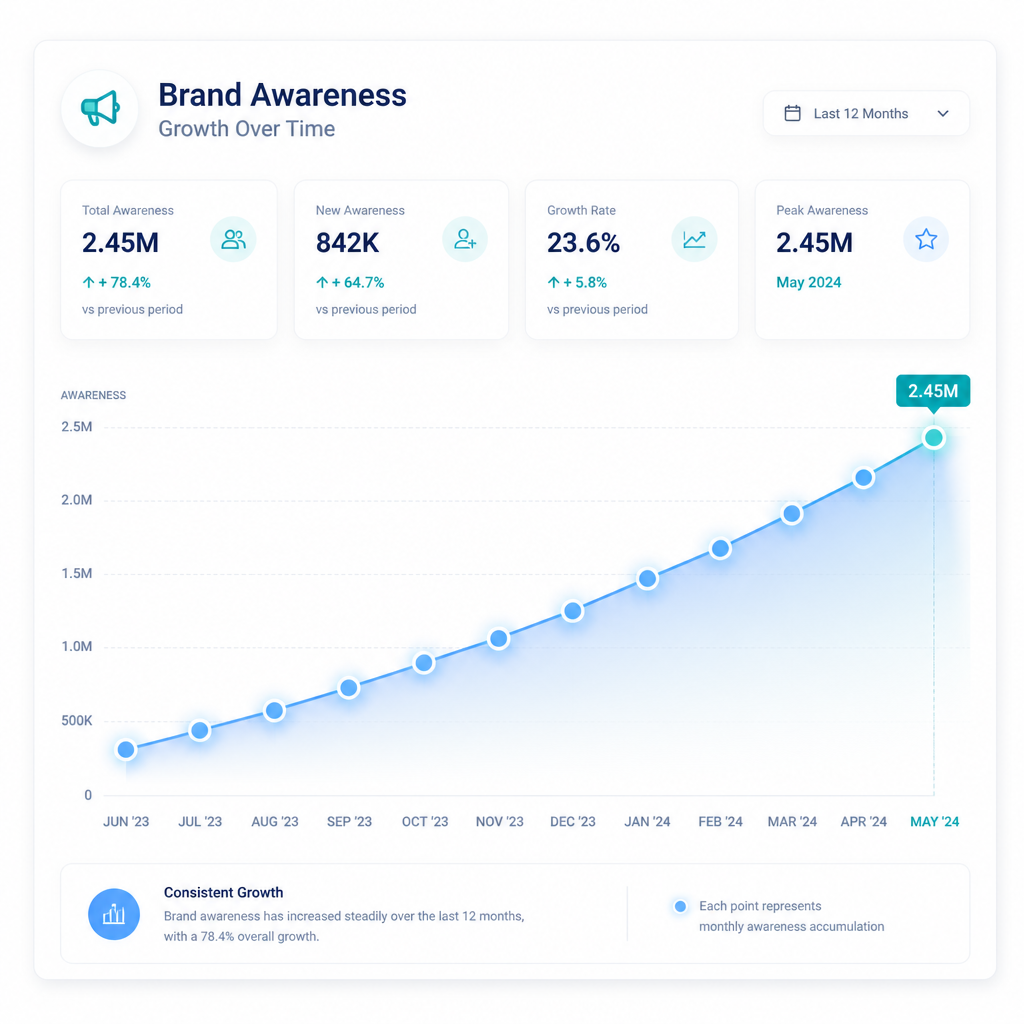
Most real estate agencies in Australia treat Google Ads purely as a lead generation tool. They obsess over cost-per-click and ignore something sitting right in front of them: every time their ad appears in search results without being clicked, they are building brand recognition at zero cost. That is the mechanic behind Google Ads free impressions real estate branding, and it is one of the most underused advantages in Australian property marketing. This article breaks down exactly how impressions work as a free branding asset, why the compounding effect matters more than most principals realise, and what your agency should be doing about it right now.
Table of Contents
- Quick Takeaways
- What Are Google Ads Free Impressions and Why They Matter for Real Estate
- Brand Awareness Through Google Ads in Real Estate Australia
- How Impressions Build Trust Before the Click
- Display and YouTube Campaigns for Real Estate Branding
- Remarketing and the Multi-Touchpoint Advantage
- Campaign Setup That Maximises Brand Impressions Without Wasting Budget
- Comparison of Branding Approaches for Real Estate Agencies
- Frequently Asked Questions
- References
Quick Takeaways
| Key Insight | Explanation |
|---|---|
| Impressions cost nothing in CPC campaigns | In a cost-per-click model, every time your ad is shown but not clicked, you pay zero. Your brand name still appeared in front of a prospective vendor or buyer. |
| Repeated exposure increases recognition over time | Research from Nielsen confirms that consumers need multiple exposures to a brand before they recall or act on it. Search impressions contribute to that count for free. |
| Your agency name in the headline is branding in itself | Even if a homeowner clicks a competitor’s ad, seeing your agency name consistently in the same search results plants a memory trace that influences future decisions. |
| Display campaigns extend impressions beyond search | Google’s Display Network reaches over 90% of internet users globally. Real estate agencies using display ads generate millions of brand impressions monthly at very low CPMs. |
| Remarketing turns past visitors into repeated impression recipients | Visitors who saw your listing pages but did not enquire can be served display and search ads, reinforcing your brand without any additional prospecting spend. |
| Impression share data reveals your local market position | Google Ads reports your Search Impression Share, showing what percentage of eligible impressions you are capturing versus competitors like neighbouring agencies or franchise networks. |
| Low monthly budgets can still generate significant brand reach | At AusPromotion’s entry point of $99/month management, agencies running modest ad spend can still accumulate thousands of branded impressions per month in their target suburbs. |
What Are Google Ads Free Impressions and Why They Matter for Real Estate
An impression, in Google Ads terms, is recorded every time your advertisement is displayed on a search results page, a website in the Display Network, or a YouTube placement. In a standard cost-per-click (CPC) campaign, you are only charged when someone clicks your ad. Every display without a click is, by definition, free exposure.
For a real estate agency operating in a competitive suburb like Sydney’s Inner West, Parramatta, or Brisbane’s Northside, this matters enormously. A prospective home seller might search “best real estate agent Newtown” a dozen times over three months before they actually call anyone. Each time your agency’s name appears in those results without being clicked, you are registering in their memory at no cost.
In practice, the agencies that dominate local real estate markets are not always spending the most on advertising. They are often the ones whose names appear most consistently, across the most touchpoints, across the longest period. Impressions are the engine behind that consistency.
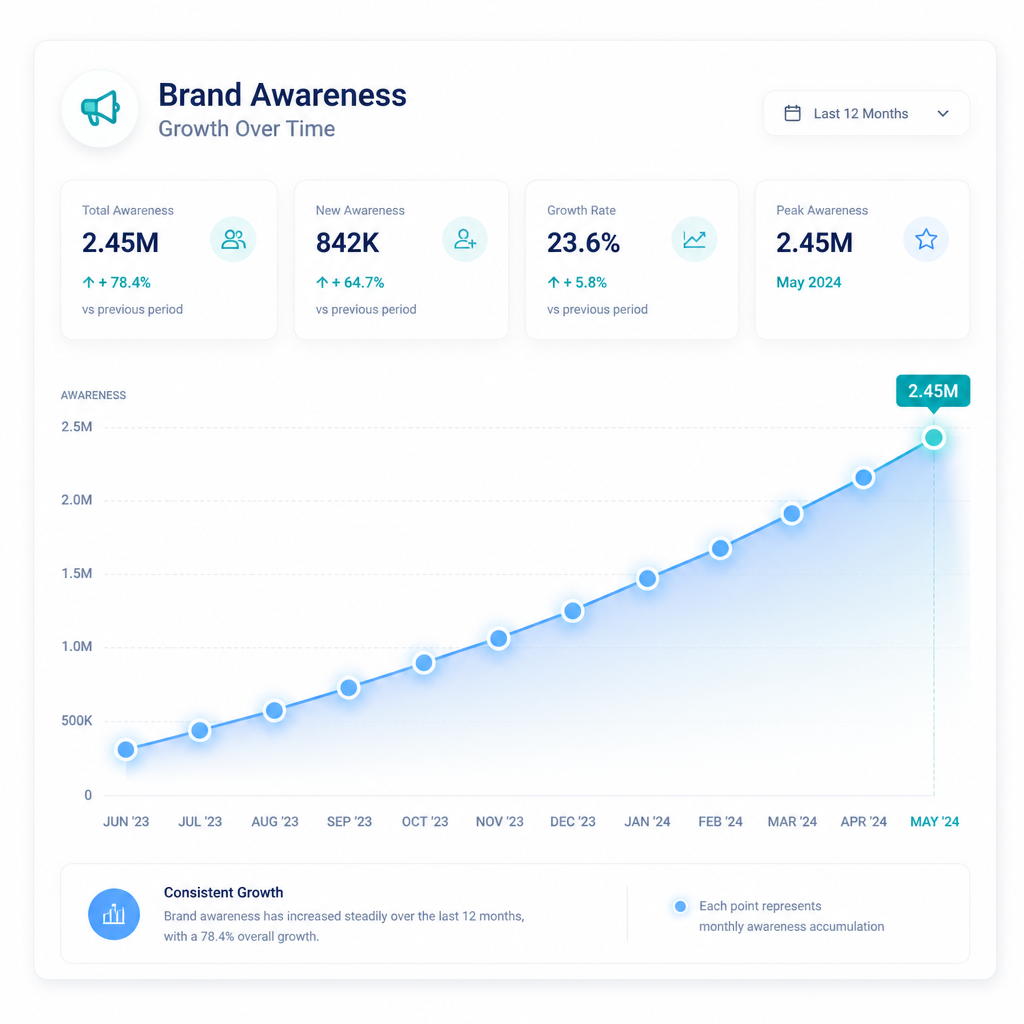
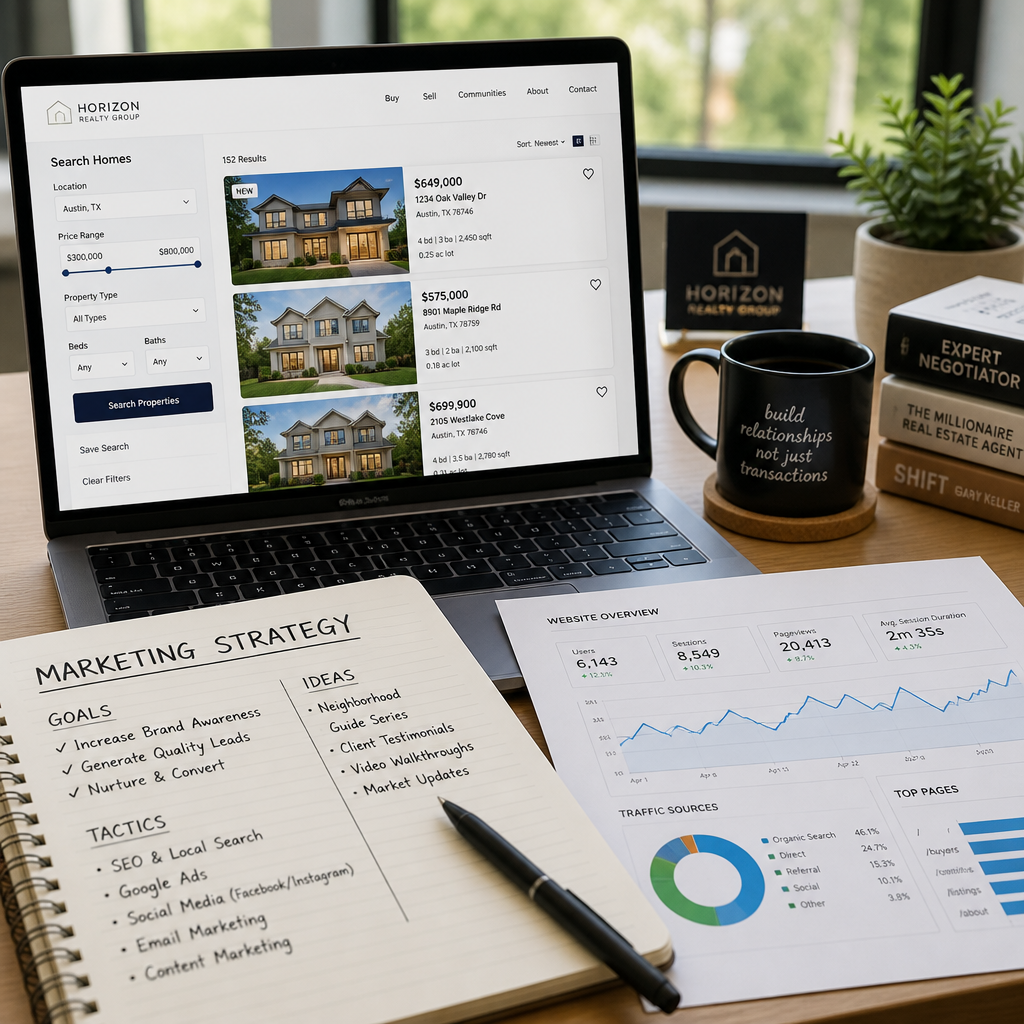
A common mistake is measuring a Google Ads campaign’s success purely by click-through rate (CTR) or cost-per-lead. That ignores the substantial branding value happening with every non-clicked impression. Agencies that understand this dynamic treat their Ads budget as a dual-purpose investment: leads now, brand equity later.
Brand Awareness Through Google Ads in Real Estate Australia
The Australian property market is hyperlocal. A real estate agency in Caulfield, Victoria is not competing with an agency in Townsville. It is competing with three or four other offices within the same postcode, all fishing in the same pool of vendors and landlords. Brand awareness Google Ads real estate Australia strategies must account for that geographic reality.
Google Ads allows targeting by suburb, postcode, and radius. This means a Caulfield agency can run a Search campaign targeting people who search property-related terms specifically within Caulfield, Glen Eira, and surrounding suburbs. Every impression generated in that radius is a free brand touch with a locally relevant prospect.
“Brand familiarity is the single strongest predictor of which agent a vendor will call first. People list with names they recognise.” – Domain Group, Agent Research Report.
The data consistently shows that brand recall lifts conversion rates significantly. HubSpot reports that consistent brand presentation across all platforms increases revenue by up to 23%. For real estate, where a single listing can generate $15,000 to $30,000 in commission, the financial case for investing in brand impressions is straightforward.
Agencies running campaigns through specialists like AusPromotion’s Google Ads management service benefit from campaigns built around both short-term lead capture and long-term impression accumulation, without needing to run two separate budget lines.
Pro tip: Include your suburb name and a recognisable brand phrase in your Google Search ad headlines. Even when your ad is not clicked, prospects read your headline. That text is your billboard, and it costs you nothing if they scroll past.
How Impressions Build Trust Before the Click
There is a psychological phenomenon called the mere exposure effect, documented by researcher Robert Zajonc in 1968 and consistently replicated since. People develop a preference for things simply because they have been exposed to them repeatedly. This applies directly to how home sellers and buyers choose a real estate agency.
A vendor who has seen your agency’s name appear in Google searches three or four times over several weeks arrives at the moment of decision with a pre-existing sense of familiarity. That familiarity functions as a proxy for trust. They may not remember where they saw your name, but they feel like they know you.
The role of ad copy in impression-based branding
The text in your Google Search ads does not just communicate a message when clicked. It communicates something every time it is displayed. Agencies that use their headline to reinforce brand attributes, such as “Local Experts Since 2005” or “Award-Winning Newtown Real Estate”, are converting every impression into a brand statement, clicked or not.
In practice, the agencies that get this right write ad copy with two audiences in mind: the person who will click today, and the person who will recognise the name in three months when they are ready to list. Most agencies only write for the first audience.
Impression frequency and vendor decision timelines
The typical Australian home seller takes 3 to 6 months from initial research to actually appointing an agent. That is a long runway. A campaign generating consistent branded impressions throughout that window has a significant advantage over one that only appears when the vendor is actively searching. Impression frequency during the research phase shapes the shortlist before any agent is called.
Pro tip: Use Google Ads’ Impression Share report weekly to monitor whether your agency is appearing in the majority of eligible searches in your target suburbs. If your Impression Share drops below 60%, consider adjusting bids or expanding your keyword set to recover lost ground.
Display and YouTube Campaigns for Real Estate Branding
Search campaigns are not the only source of free impressions. Google’s Display Network, which includes millions of websites, apps, and platforms, runs on a CPM (cost per thousand impressions) or CPC model. When using CPC bidding on Display, every non-clicked impression is again free brand exposure.
A real estate agency running display ads targeting people who have visited property listing sites like realestate.com.au or domain.com.au can generate hundreds of thousands of impressions per month on modest budgets. At those volumes, brand recognition builds quickly within a local market.

YouTube pre-roll ads, another format available through Google Ads, operate on a cost-per-view model. Viewers who skip after 5 seconds generate zero cost, but they have still seen your agency’s name, logo, and opening frame. For a branding campaign, those 5-second exposures accumulate into significant market presence over time.
AusPromotion manages YouTube video ad campaigns as part of its Google Ads service, meaning real estate agencies can access this branding channel without needing a separate agency or specialist. The integration matters because impression data from YouTube feeds into the same Google Ads reporting as search and display, giving a unified view of total brand reach.
Remarketing and the Multi-Touchpoint Advantage
Remarketing is where the impression strategy becomes most powerful for real estate agencies. When someone visits your agency’s website, looks at your agent profiles, or browses your listings pages, Google places a cookie that allows you to serve them ads across the Display Network and YouTube for weeks or months afterward.
Those subsequent impressions are highly targeted. The person already knows who you are. You are not introducing yourself; you are reinforcing. Each time they see your brand while reading the news, checking the weather, or browsing a property forum, your agency climbs higher on their mental shortlist.
McKinsey’s consumer decision journey research established that brand touchpoints during the consideration phase, not just at the moment of purchase, are the primary driver of final choice. In real estate, the consideration phase is the 3 to 6 months a vendor spends thinking about whether and when to sell. Remarketing impressions during this window are among the most cost-effective investments an agency can make.
A common mistake agencies make is running remarketing for only 7 to 14 days. For real estate, a 60 to 90-day remarketing window is far more appropriate, given how long the vendor consideration cycle actually runs. Short remarketing windows mean your brand disappears precisely when the vendor is getting closer to a decision.
AusPromotion’s campaign management includes remarketing campaign setup as part of its core offering, which means real estate clients can activate this multi-touchpoint strategy without it being an add-on cost that blows out the budget.
Campaign Setup That Maximises Brand Impressions Without Wasting Budget
Not all impression volume is useful. A real estate agency in Manly, NSW generating impressions among people in Melbourne or regional Queensland is accumulating brand exposure with people who will never list with them. The setup of your campaign determines whether your impressions are building brand equity in your actual market or simply burning budget.
Geographic targeting precision
Google Ads allows targeting by specific postcodes, suburbs, or a radius from a physical address. For real estate agencies, the most effective approach is a tight radius of 10 to 15 kilometres from your office, overlaid with the specific suburbs where you want to grow market share. This ensures that every impression, clicked or not, lands in front of a geographically relevant prospect.
Keyword selection for maximum branded impression volume
Broad match and phrase match keywords generate more impressions than exact match. In a branding-focused campaign, that is acceptable, provided the geographic targeting is tight enough to prevent irrelevant reach. Terms like “real estate agent [suburb]”, “property for sale [suburb]”, and “appraise my home [suburb]” all attract vendors and buyers in the research phase, which is exactly when brand impressions are most valuable.
Bid strategy for impression accumulation
If your primary goal is impression volume rather than immediate clicks, Target Impression Share bidding is worth testing. This strategy tells Google to show your ad in a specified percentage of eligible auctions, prioritising reach over cost efficiency. For a branding campaign running alongside a separate lead generation campaign, splitting the two objectives into separate campaign types gives you cleaner data and better budget control.
AusPromotion’s approach to Google Ads campaign management for real estate clients separates brand awareness campaigns from conversion-focused campaigns structurally, rather than trying to serve both goals with a single setup. That distinction makes a measurable difference in both branding outcomes and lead quality.
Comparison of Branding Approaches for Real Estate Agencies
| Branding Approach | Cost Structure | Reach and Brand Impression Potential |
|---|---|---|
| Google Ads Search (CPC model) | Pay only on clicks. Non-clicked impressions are free. Costs scale with lead volume, not brand exposure. | High within target search queries. Impression share is measurable and directly tied to local search volume. Ideal for suburb-level brand dominance. |
| Google Display Network with CPC bidding | Pay only on clicks. Impression volume can reach hundreds of thousands per month at low spend. CPMs are effectively zero when no clicks occur. | Very high reach across news sites, blogs, and property forums. Effective for building visual brand recognition over time. Less intent-based than search. |
| Traditional print and letterbox advertising | Fixed cost per campaign regardless of reach. No impression tracking. No ability to retarget based on exposure. | Limited and hard to measure. No data on who saw the ad or how often. Declining readership in most metropolitan markets reduces effective reach year on year. |
The comparison above makes clear that Google Ads, particularly in a CPC model, generates brand impressions at a structural cost advantage over traditional media. The difference is not marginal. An agency running a $500 per month ad spend on Google can generate tens of thousands of branded impressions in its target suburbs. The equivalent letterbox campaign would cost several times more and produce no retargeting capability, no impression data, and no ability to optimise.
Frequently Asked Questions
Do Google Ads impressions actually help a real estate agency if nobody clicks the ad?
Yes, consistently. The mere exposure effect is well-documented in consumer psychology research and directly applies to how vendors choose an agent. Repeated non-clicked impressions build name recognition that influences decisions made weeks or months later. Agencies that appear consistently in search results, even without generating clicks on every occasion, have a measurable advantage in brand recall over agencies that do not run any paid presence.
How much budget does a real estate agency need to start accumulating meaningful impressions through Google Ads?
In a targeted suburb campaign, even $300 to $500 per month in ad spend can generate thousands of impressions per week among property-relevant searchers. The management structure matters as much as the budget. AusPromotion’s management service starts at $99 per month, which means agencies can access professional campaign optimisation without a management fee that eats the majority of a small budget.
What is Search Impression Share and why should real estate principals track it?
Search Impression Share is a Google Ads metric that shows what percentage of the total eligible impressions in your targeted searches your ads actually appeared in. If your Impression Share is 40%, your competitors are capturing 60% of the brand exposure opportunities in that search space. For a real estate agency trying to dominate a specific suburb’s mindshare, tracking and growing Impression Share is a direct proxy for local brand progress.
Can a small independent real estate agency compete with large franchise networks on brand impressions?
Within a specific suburb or postcode, yes. Google Ads is not a broadcast medium where the biggest spender automatically wins. A boutique agency with a well-structured, tightly targeted campaign can consistently outperform a national franchise in Impression Share within a 5-kilometre radius, even on a fraction of the franchise’s total marketing budget. The advantage goes to whoever structures their campaign most intelligently for local dominance, not to whoever spends the most nationally.
How does remarketing fit into a real estate agency’s impression branding strategy?
Remarketing amplifies the impression strategy by ensuring that visitors who have already shown interest in your agency see your brand repeatedly across the broader web. For real estate, where the decision cycle is long, remarketing extends your brand presence throughout the vendor’s entire consideration period rather than just at the moment of search. It is the most cost-efficient way to maintain top-of-mind awareness with warm prospects who are not yet ready to call.
What type of ad creative works best for impression-based branding in real estate?
For search ads, your agency name should appear in the headline, alongside a suburb-specific value statement. For display ads, consistent use of your logo, brand colours, and a recognisable tagline matters more than promotional messaging. The goal is recognition, not conversion, in a branding campaign. Creative consistency across formats, search, display, and YouTube pre-roll, reinforces the same brand identity every time an impression is delivered, regardless of the platform.
Have you noticed your real estate agency’s brand awareness grow from running Google Ads, or do you have questions about setting up impression-focused campaigns? Share your experience below.
References
- Forbes marketing and advertising insights covering brand awareness strategy and digital advertising effectiveness
- HubSpot marketing statistics on brand consistency, consumer behaviour, and digital campaign performance
- Statista data on Australian real estate market trends, digital advertising spend, and consumer decision-making patterns
- McKinsey and Company research on the consumer decision journey and the role of brand touchpoints in purchase decisions
- Moz learning centre covering digital marketing fundamentals including search visibility and brand presence strategies