

Most new real estate agents spend their first six months chasing cold leads, attending networking events, and hoping for referrals that may never come. The data tells a harder story: according to the Real Estate Institute of Australia, nearly 50% of new agents leave the industry within their first two years, and a lack of consistent lead flow is the primary reason. Google Ads for new real estate agents in Australia offers a direct, measurable path around that problem. Instead of waiting for the market to notice you, you put your name in front of people who are actively searching for exactly what you offer, right now, in your specific suburb or postcode.
Table of Contents
- Quick Takeaways
- Why Google Ads Works Faster Than Organic for New Agents
- How to Build a Real Estate Client Base With Google Ads
- Campaign Types That Actually Work for New Real Estate Agents
- Targeting Strategy: Suburbs, Intent, and Budget
- Comparing Your Client Acquisition Options
- Common Mistakes New Agents Make With Google Ads
- Remarketing: The Secret Weapon for Brand-New Agents
- Frequently Asked Questions
- References
Quick Takeaways
| Key Insight | Explanation |
|---|---|
| Search intent is already qualified | Someone typing “real estate agent in Parramatta” is actively looking to hire. Google Ads puts you at the top of that search immediately, without waiting months for SEO to rank. |
| You can start for as little as $99/month in management fees | Professional Google Ads management through specialists like Aus Promotion means you get structured campaigns without the trial-and-error cost of doing it yourself from scratch. |
| Geographic targeting is your biggest advantage | New agents should dominate 2-3 suburbs rather than spread thin. Google Ads lets you set precise postcode-level targeting so your budget goes only to the areas where you actually work. |
| Remarketing builds recognition faster than any other tool | A prospect who visits your site once is unlikely to call. Remarketing display ads keep your name visible across Google’s Display Network, creating familiarity that converts cold leads into booked appraisals. |
| Quality Score directly controls your cost per click | Google rewards ads with relevant landing pages and high click-through rates with lower CPCs. A well-structured campaign from day one saves money that new agents cannot afford to waste. |
| Call extensions are non-negotiable in real estate | Most vendor and buyer enquiries happen via phone. Adding call extensions to your search ads lets prospects call you directly from the search results page, removing friction entirely. |
| YouTube pre-roll ads build authority at low cost | Google’s YouTube advertising allows you to show suburb market update ads to local audiences at a cost-per-view often under $0.05, building trust before a prospect ever visits your website. |
Why Google Ads Works Faster Than Organic for New Agents
SEO for real estate is competitive to the point of being brutal for newcomers. Established agencies with years of content, backlinks, and domain authority dominate the first page of Google for almost every valuable suburb-level keyword in Australia. A brand-new agent trying to rank organically for “real estate agent Chatswood” is competing against Ray White, McGrath, and LJ Hooker simultaneously. That race takes 12 to 18 months at minimum, and most new agents do not have that runway.
Google Ads bypasses that entirely. The moment your campaign goes live, your listing appears above the organic results. The critical distinction is that you are not buying visibility broadly, you are buying placement in front of people who have already signalled commercial intent through their search query. That is a fundamentally different audience than someone scrolling through a social media feed.
HubSpot’s marketing data consistently shows that paid search converts at roughly twice the rate of organic traffic for service-based businesses. In real estate, where a single commission can exceed $15,000, even a modest conversion rate improvement justifies the spend immediately.

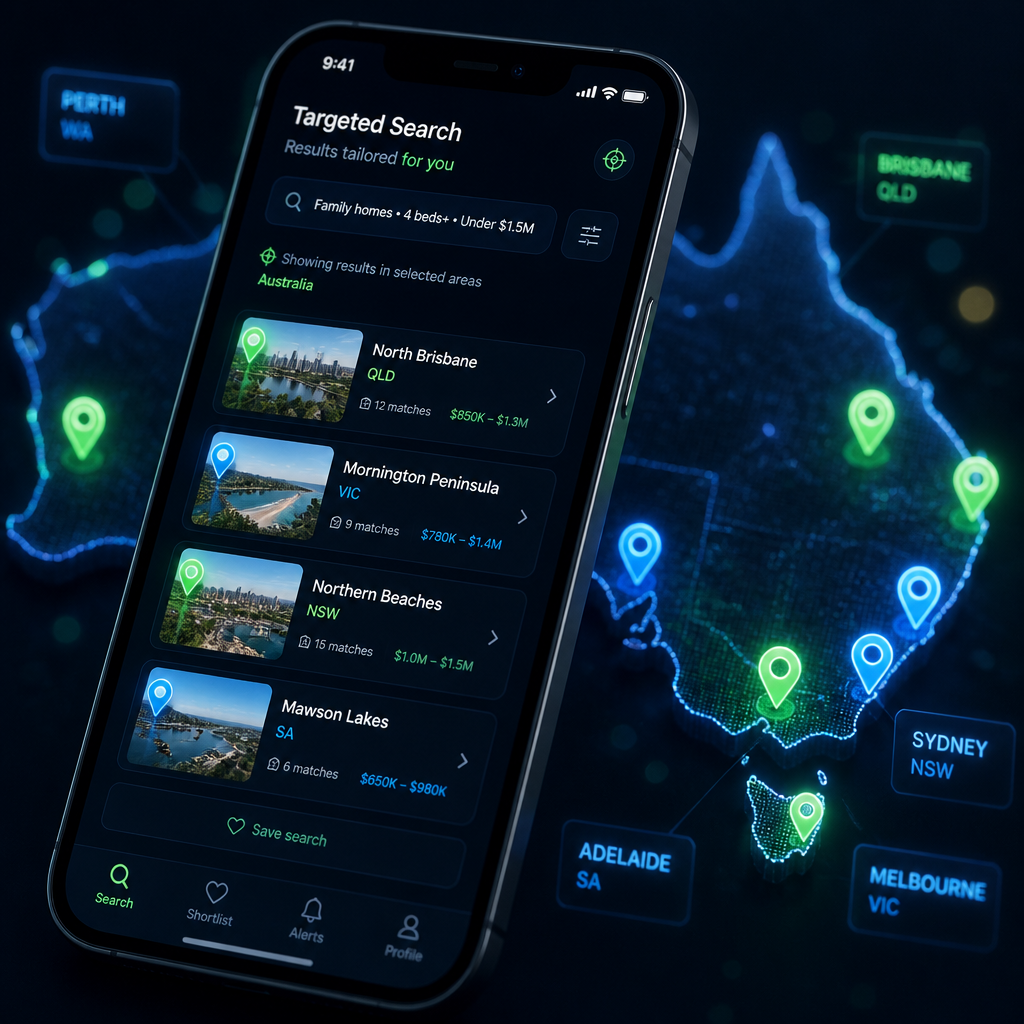
The Speed-to-Market Advantage
In practice, a properly configured Google Search campaign can be approved and serving impressions within 24 to 48 hours of launch. Compare that to waiting months for a letterbox drop campaign to generate recognition, or years for a referral network to mature. For agents who need to hit income targets in their first quarter, that timeline difference is not minor. It is the difference between staying in the industry and leaving it.
The data consistently shows that new agents who invest in paid digital advertising in their first three months establish client pipelines significantly faster than those who rely on passive methods alone. Speed of client acquisition in the early months directly determines whether an agent survives long enough to build the reputation that generates referrals.
How to Build a Real Estate Client Base With Google Ads
Building a real estate client base with Google Ads is not simply a matter of throwing money at keywords and waiting for the phone to ring. The agents who do that waste their budget within weeks. The ones who build sustainable pipelines approach it with three distinct phases: capture, nurture, and convert.
Phase 1: Capture High-Intent Leads With Search Campaigns
Search campaigns are the foundation of any new agent’s Google Ads strategy. Your primary focus should be on keywords that signal immediate intent: terms like “sell my house in [suburb]”, “property appraisal [suburb]”, and “real estate agent [suburb] fees”. These are people at the bottom of the decision funnel who are ready to talk to an agent this week, not in six months.
A common mistake is targeting broad terms like “real estate Australia”. That keyword pulls in every property investor, renter, overseas buyer, and research-phase browser in the country. You pay for all of them and convert almost none. Use exact match and phrase match keywords focused tightly on your service area and service type.
Phase 2: Nurture With Display and YouTube Ads
Not every prospect is ready to act the first time they see your ad. Display campaigns across Google’s network and YouTube pre-roll ads serve as ongoing reminders that you exist and are active in their suburb. For a new agent with no brand recognition, this nurturing phase is what creates the familiarity that makes someone choose you over an established competitor when they are finally ready to list.
Pro tip: Create a specific landing page for each suburb you target rather than sending all ad traffic to your agency homepage. A page that says “Your Local Parramatta Property Expert” with your photo, recent sales data, and a single call-to-action form will convert at three to five times the rate of a generic homepage.
Phase 3: Convert With Strong Landing Page Structure
The landing page is where most new agents lose money they have already spent acquiring the click. If a prospect clicks your ad and lands on a page that is slow to load, lacks a clear offer, or buries the contact form below the fold, they leave. Google’s own data shows that a one-second delay in page load time reduces mobile conversions by up to 20%.
Your landing page needs one offer, one headline, one form, and social proof in the form of genuine vendor testimonials. Remove navigation menus, secondary offers, and anything else that gives the visitor a reason to click away without enquiring.
Campaign Types That Actually Work for New Real Estate Agents
Not all Google Ads products are equally suited to a new agent’s situation. Budget is limited. Time is limited. The campaign types you choose in the first three to six months need to deliver results efficiently, not serve as an experiment in every product Google offers.
Google Search Ads: Your Highest Priority
Search ads should receive the majority of your budget, particularly in the early months. These are text ads that appear when someone types a relevant query. Because they match active search intent, they have the shortest path from impression to enquiry of any digital advertising format. For a new agent in a specific suburb, a well-structured search campaign with proper negative keywords can generate genuine vendor enquiries within the first two weeks.
Google Display Ads: Building Local Recognition
Display ads are image-based ads that appear across the millions of websites in Google’s Display Network. For new real estate agents, the most effective use of display is remarketing, which is covered in a dedicated section below. However, prospecting display campaigns targeted by postcode and property-related interests can also supplement your search efforts by building name recognition in your target suburbs at a relatively low cost per thousand impressions.
YouTube Video Ads: Trust at Scale
YouTube advertising is part of the Google Ads platform and is genuinely underused by new agents in Australia. A 15 to 30 second non-skippable ad showing your face, your suburb knowledge, and a specific market insight positions you as a credible local expert before a prospect has ever visited your website. The cost-per-view on YouTube is consistently lower than the cost-per-click on search, making it one of the most efficient brand-building tools available at a low monthly spend.

Pro tip: If you are managing your own Google Ads account without professional help, start with one search campaign targeting your best two or three high-intent keywords before expanding to display or YouTube. Spreading a small budget across multiple campaign types before you have data is one of the fastest ways to burn through your monthly spend with nothing to show for it.
Targeting Strategy: Suburbs, Intent, and Budget
The single most important decision a new agent makes in their Google Ads setup is how they define their target geography. Agents consistently over-extend their geographic targeting because they want to be everywhere. That instinct is wrong and expensive.
The Two-Suburb Rule for New Agents
In practice, a new agent with a $500 to $800 monthly ad spend should target no more than two or three suburbs with their search campaigns. This concentrates impressions, improves click-through rates, and raises Quality Scores. A higher Quality Score means Google charges you less per click. Dominating two suburbs costs less and converts better than being mediocre across ten.
Keyword Intent Tiers
Structure your keywords around three intent tiers. High-intent keywords like “sell property [suburb]” or “free property appraisal [suburb]” should use exact match and receive the most budget. Mid-intent keywords like “real estate agent [suburb] reviews” use phrase match and receive secondary budget. Research-phase queries like “average house prices [suburb] 2024” should be excluded entirely with negative keywords unless you are running a specific content-lead campaign.
“The businesses that win with Google Ads are not the ones with the biggest budgets. They are the ones with the tightest targeting, the most relevant ads, and the landing pages that actually convert. Budget is a multiplier of strategy, not a substitute for it.” – Google Ads performance specialist, cited in Google’s Small Business Success Guide
Setting a Realistic Starting Budget
Real estate is one of the more competitive Google Ads categories in Australia. Cost-per-click for high-intent real estate keywords in metro suburbs can range from $3 to $12 depending on competition. A realistic starting budget for a new agent is $400 to $600 per month in ad spend, plus management fees. At that level, a well-run campaign can generate between 30 and 80 clicks per month, which in real estate, where a single listing can generate thousands in commission, delivers a strong return on investment if even one or two convert to actual vendor relationships.
Comparing Your Client Acquisition Options
New agents face a real choice about where to put limited marketing dollars. The table below compares the three most common approaches honestly, without softening the weaknesses of each.
| Approach | Time to First Lead | Cost Efficiency for New Agents |
|---|---|---|
| Google Ads (Search + Remarketing) | 24 to 72 hours after campaign approval | High. Every dollar is traceable to an impression, click, or conversion. Budget can be paused or adjusted in real time based on performance data. |
| Organic SEO and Content Marketing | 6 to 18 months for meaningful traffic in competitive real estate suburbs | Low in the short term for new agents. High domain authority competitors dominate rankings. Requires consistent content production with no guaranteed outcome. |
| Traditional Methods (Letterbox drops, print ads, cold calling) | 4 to 12 weeks depending on volume and frequency | Low to moderate. High cost per contact, no direct performance tracking, and declining response rates as consumer behaviour shifts to digital channels. |
Common Mistakes New Agents Make With Google Ads
Most new agents who try Google Ads without professional guidance make the same small set of expensive mistakes. Understanding these before you spend a dollar is the difference between a campaign that generates enquiries and one that drains your budget in four weeks.
Not Using Negative Keywords
Without a comprehensive negative keyword list, your ads will show for irrelevant queries. A search for “real estate agent jobs [suburb]” is not a vendor enquiry. Neither is “how to become a real estate agent in Australia”. Negative keywords block these wasted clicks. A campaign launched without them will burn 20 to 40% of its budget on non-converting traffic within the first month.
Sending All Traffic to the Homepage
A common mistake is treating Google Ads as a traffic tool rather than a lead generation tool. Traffic to your homepage without a specific, relevant landing page results in high bounce rates, low Quality Scores, and higher cost per click. Every ad group should link to a page specifically designed around the intent of that search query.
Ignoring Conversion Tracking
If you cannot measure which keywords, ads, and landing pages are generating enquiries, you are flying blind. Google Ads conversion tracking needs to be set up before the campaign launches, not after. Without it, you have no basis for deciding where to increase budget and where to cut it. This is the most common and most costly oversight among self-managed campaigns in real estate.
Remarketing: The Secret Weapon for Brand-New Agents
Remarketing is the practice of showing ads to people who have already visited your website. For a new agent with zero brand recognition, it is one of the most valuable tools available because it transforms a single website visit into repeated touchpoints that build familiarity and trust over time.
The average real estate vendor considers selling for three to six months before contacting an agent. During that research period, they will visit multiple agent websites, compare fees and track records, and gradually form preferences. A new agent who stays visible throughout that process through display remarketing ads is far more likely to be shortlisted than one who makes a single impression and disappears.
Remarketing audiences in Google Ads can be segmented by page visited, time spent on site, and actions taken. Someone who viewed your suburb landing page but did not complete the enquiry form is a high-priority remarketing target. Someone who only visited your homepage is a lower priority. Segment your remarketing audiences and assign budgets accordingly rather than treating all past visitors as identical.
Aus Promotion’s remarketing campaigns for real estate clients are structured to maintain presence across Google’s Display Network and YouTube at a cost that fits entry-level budgets, creating the multiple customer touchpoints that transform cold website visitors into booked appraisals. This kind of multi-platform visibility is exactly what a new agent needs when they cannot yet rely on word-of-mouth to carry them.
Frequently Asked Questions
How much should a new real estate agent spend on Google Ads in Australia?
A realistic starting point is $400 to $600 per month in ad spend, separate from any management fees. This is enough to generate meaningful data and a steady stream of clicks in one or two target suburbs. Spending less than $300 per month in competitive real estate markets often produces insufficient impression volume to draw conclusions or generate consistent enquiries. As campaigns prove their return on investment, budget should scale proportionally.
How long does it take to see results from Google Ads as a new real estate agent?
Search campaigns can generate their first enquiries within the first one to two weeks if targeting is tight and the landing page is well-structured. However, meaningful performance data, the kind that allows real optimisation decisions, typically requires four to six weeks of campaign data. Agents who judge Google Ads a failure after two weeks are making decisions without sufficient evidence. The first 30 days are about data collection as much as lead generation.
Can I run Google Ads myself or do I need a professional?
Technically, any agent can create a Google Ads account and launch a campaign. In practice, the number of variables involved in running a profitable campaign including keyword match types, negative keyword lists, Quality Score optimisation, bid strategies, conversion tracking setup, and landing page alignment means that self-managed campaigns by people new to the platform consistently underperform professionally managed ones. The cost of mistakes in the first two months often exceeds the cost of professional management for the entire year. Specialists like Aus Promotion offer management from $99 per month, which for a real estate agent is a negligible cost relative to a single commission.
What keywords should a new real estate agent target with Google Ads?
Start with high-intent, suburb-specific keywords: “sell my house in [suburb]”, “property appraisal [suburb]”, “real estate agent [suburb]”, and “list my property [suburb]”. Use exact match for your highest-value terms to control spend. Add a thorough negative keyword list that excludes rental, job-seeking, and research-phase queries. Avoid broad match keywords entirely until you have several months of search term data to identify what your budget is actually being spent on.
Is Google Ads or social media advertising better for new real estate agents?
Google Ads and social media advertising serve different purposes and are not direct substitutes. Google Ads captures demand that already exists, people who are actively searching for an agent. Social media advertising creates demand by putting your name in front of people who are not yet thinking about buying or selling. For a new agent who needs leads quickly, Google Ads delivers a faster return because it intercepts active intent. Social media is valuable for brand building but should be a secondary channel, not the primary one, when pipeline speed matters most.
Should new real estate agents use Google Ads for buyers, sellers, or both?
Sellers (vendors) are the higher priority target for most agents because a listing generates commission directly. Buyer campaigns can work for buyer’s agents specifically, but for a standard selling agent, budget should concentrate on vendor-intent keywords first. Buyer leads are also generally lower in urgency and take longer to convert to a transaction. Once your vendor pipeline is generating consistent enquiries and your budget increases, adding buyer-focused campaigns makes sense as a secondary expansion.
Have you tried running Google Ads as a new real estate agent, and what has your experience been with getting that first client through paid search?
References
- HubSpot marketing research and conversion rate benchmarks for paid search and digital advertising
- Statista global and Australian digital advertising market data and real estate sector statistics
- Ahrefs research on organic search competition and how paid search compares for new market entrants
- Forbes analysis of real estate marketing strategies and digital lead generation for agents
- Moz educational resources on search intent, keyword research, and how paid and organic search interact