

Most real estate agencies in Australia sign a Google Ads management contract, see mediocre results for three months, and then discover they cannot leave without paying a penalty. That is not a partnership. That is a trap. No contract Google Ads management Australia is not just a pricing preference, it is a structural safeguard that keeps your agency in control of its own marketing budget. For real estate teams where listing volumes shift with seasons, interest rates, and local auction clearance rates, locking into a rigid 12-month agreement is one of the most expensive mistakes you can make.
Table of Contents
- Quick Takeaways
- Why Lock-In Contracts Hurt Real Estate Agencies
- What No Contract Google Ads Management Actually Means
- Flexibility vs Lock-In: A Direct Comparison
- How Flexible Google Ads Agencies Serve Real Estate Better
- The Real Cost of Staying with the Wrong Agency
- What to Look for in a Flexible Google Ads Agency for Real Estate
- Frequently Asked Questions
- References
Quick Takeaways
| Key Insight | Explanation |
|---|---|
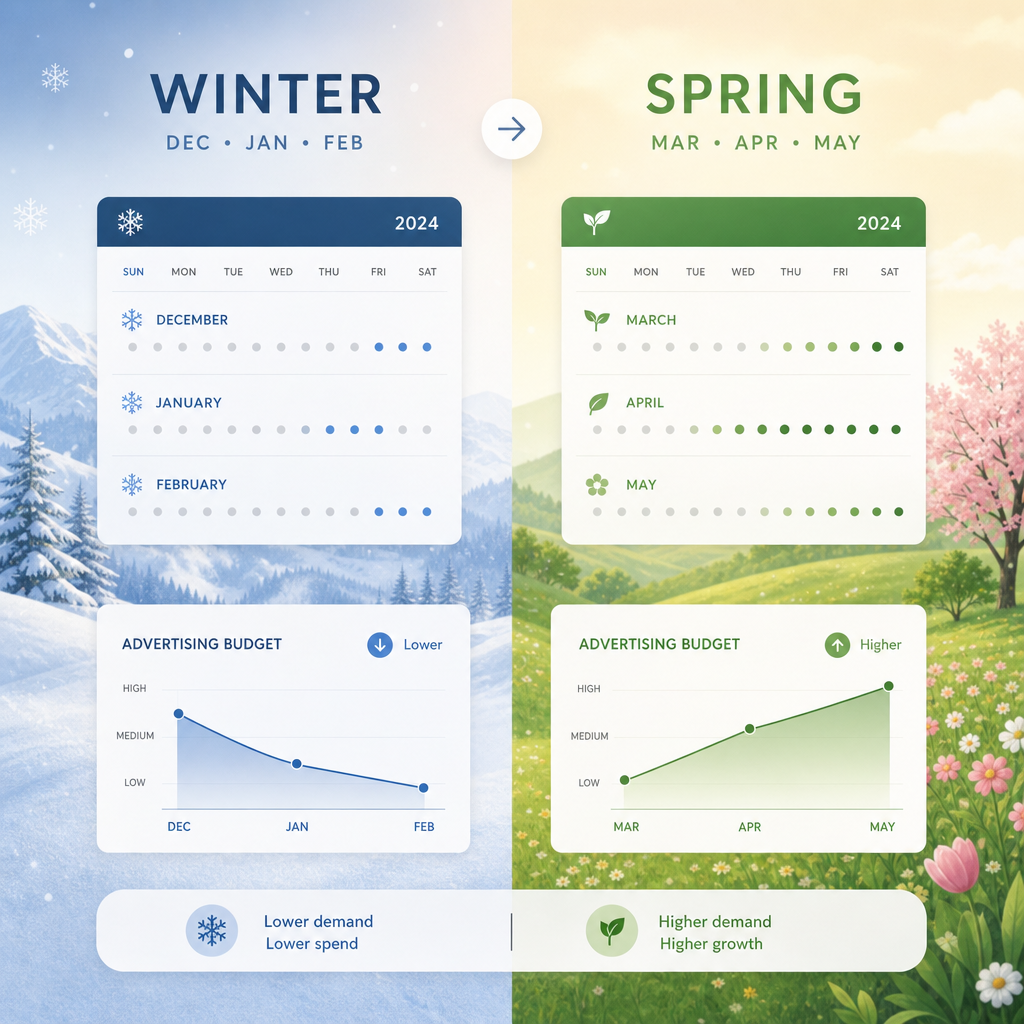
| Month-to-month billing protects seasonal budgets | Real estate ad spend needs to drop in slow winter months and spike during spring listing seasons. A lock-in contract prevents this agility. |
| No exit penalty means honest performance pressure | When an agency knows you can leave at any time, they must deliver results every month, not just in month one. |
| Flexible agreements allow faster pivot between campaign types | If your search ads underperform, a no-contract agency can shift budget to remarketing or YouTube ads without a renegotiation process. |
| $99/month entry points lower the risk of testing new strategies | Affordable no-contract management means real estate agencies can test display ads or video campaigns without committing thousands upfront. |
| Lock-in contracts favour the agency, not the client | Long contracts protect agency revenue, not campaign performance. No-contract models align agency incentives with your actual results. |
| Real estate Google Ads performance varies by suburb and season | A rigid campaign structure cannot respond to a sudden market shift in your patch. Flexible management lets you adjust targeting and spend in real time. |
| Transparency is easier to enforce without a contract | Agencies without lock-in have no contractual leverage to hide poor metrics. Clear monthly reporting becomes non-negotiable. |
Why Lock-In Contracts Hurt Real Estate Agencies
Real estate is one of the most volatile lead-generation environments in Australia. The Reserve Bank of Australia has moved the cash rate multiple times in recent years, directly impacting buyer demand and seller confidence. When buyer enquiries drop 30% in a quarter because interest rate sentiment shifts, your Google Ads budget should respond immediately. A 12-month lock-in contract does not allow that.
In practice, agencies locked into long-term Google Ads agreements end up paying for campaigns that no longer reflect their current market conditions. They are running ads for listings that have sold, targeting demographics that have moved on, and spending on keywords that the market no longer searches. The agency keeps billing. The results keep declining.
Seasonal listing volumes demand budget flexibility
Spring is peak listing season across most Australian capital cities. Autumn brings another wave. Mid-winter is notoriously slow. A real estate agency spending the same amount on Google Ads in July as it does in October is almost certainly wasting money. Flexible Google Ads management means your monthly spend can contract and expand with your pipeline, not with a contract renewal date.
This is not a minor operational detail. According to data published by the Real Estate Institute of Australia, listing volumes in some markets swing by more than 40% between peak and off-peak periods. Running a fixed-budget ad campaign across that swing is the equivalent of running the same newspaper ad every week regardless of whether your office is open.
Pro tip: Before signing any Google Ads management agreement, ask the agency to show you their recommended budget scaling approach across a 12-month calendar. If they cannot produce a seasonal budget plan specific to your suburb or city, they are not thinking about your business, they are thinking about their retainer.

Lock-in contracts create a conflict of interest
When an agency is guaranteed 12 months of fees regardless of outcomes, their incentive to chase performance weakens after the contract is signed. This is not a cynical generalisation. It is the predictable result of misaligned financial incentives. The agency’s revenue is secured. Yours is not.
No-contract Google Ads management flips this dynamic. If results drop, you can leave. That single fact changes how an agency approaches every campaign, every month. It creates performance pressure that a signed contract actively removes.
What No Contract Google Ads Management Actually Means
No contract does not mean no commitment. It means the commitment is earned monthly through results rather than enforced through legal paperwork. A proper no-contract Google Ads management service still includes campaign setup, ongoing optimisation, keyword management, ad copy testing, and performance reporting. The difference is that you can pause or exit at the end of any billing cycle.
For real estate agencies in Australia and New Zealand, this model makes direct financial sense. Property management divisions have different advertising needs than sales teams. A boutique agency in a regional town has different Google Ads requirements than a franchise in Sydney’s inner west. No-contract management allows each of these businesses to get the service structure they need without being locked into a one-size-fits-all package for a year.
What you should still expect from a no-contract agency
Flexible billing does not mean light-touch management. A legitimate no-contract Google Ads agency for real estate should be delivering: complete campaign setup including ad groups and negative keyword lists, monthly bid strategy reviews, A/B testing of ad copy, conversion tracking via your website or CRM, and clear reporting on cost-per-lead by campaign type.
If an agency is using the no-contract model as justification for minimal management effort, that is a red flag. The no-contract structure should free you from financial risk, not lower the standard of work. At Aus Promotion, the no lock-in model is paired with full campaign management starting from $99 per month, which means real estate agencies get professional Google Ads oversight without the financial exposure of a long-term commitment.
Pro tip: Request a sample monthly report from any Google Ads agency before you start. If the report does not break down cost-per-click, conversion rate, and cost-per-lead by campaign, it is not a useful document. You need data that tells you which ad types are generating real estate enquiries, not just impressions.
Flexibility vs Lock-In: A Direct Comparison
The table below compares the three most common Google Ads management structures that real estate agencies encounter in the Australian market. This is not theoretical. These structures reflect what agencies like Hydra Digital, Digital Nomads HQ, and comparable providers offer versus a genuinely no-contract model.
| Management Structure | No-Contract Monthly (e.g., Aus Promotion) | 12-Month Lock-In Contract | Self-Managed via Google |
|---|---|---|---|
| Exit flexibility | Cancel anytime, end of billing cycle | Penalty clauses apply, often 3 months fees | Full flexibility, no fees |
| Budget agility | Adjust monthly based on listing volume | Usually fixed or requires renegotiation | Full control, but requires internal expertise |
| Performance accountability | High, agency must earn retention every month | Lower, revenue is secured regardless of results | Fully on your team, which carries its own risk |
| Setup and onboarding cost | Low entry from $99/month including setup | Often a separate setup fee plus monthly retainer | No fee but significant time investment required |
| Suitability for real estate seasonality | High, spend can scale with listing seasons | Low, fixed commitments do not flex with market | Medium, flexible but requires ongoing expertise |
How Flexible Google Ads Agencies Serve Real Estate Better
Real estate Google Ads campaigns are not set-and-forget. The keyword intent behind “houses for sale in Brisbane” shifts depending on auction clearance rates, stock levels, and media sentiment. A flexible agency can respond to those shifts in real time. A locked-in agency is often managing your account alongside dozens of other clients under a standardised quarterly review structure.

The data consistently shows that campaign performance degrades when management is infrequent. Google’s own research indicates that accounts reviewed and optimised weekly outperform monthly-reviewed accounts on cost-per-conversion by a significant margin. A no-contract model, where the agency is always aware you can leave, creates the internal motivation to maintain that review cadence.
Multi-channel campaigns without multi-year commitments
Real estate agencies benefit from running search ads, display ads, and remarketing campaigns simultaneously to create multiple touchpoints with potential buyers and vendors. A buyer who sees your ad when searching for properties, then sees your brand while reading Domain’s news section, then sees a remarketing ad reminding them of a specific listing, is far more likely to convert than one who saw a single search ad.
Building that kind of multi-channel presence traditionally felt like a commitment that required a long-term agency relationship. In practice, a well-structured no-contract agency can set up all three campaign types in the onboarding phase and adjust channel mix monthly based on which is delivering the best cost-per-lead for your specific market.
Responding to competitive pressure in your suburb
If a competitor agency opens a new office in your primary selling area and starts aggressively bidding on your branded keywords, you need to respond within days, not at your next quarterly review. A flexible Google Ads management arrangement allows that response without a change-order process or contract amendment. You call, you approve a budget shift, the campaign adjusts. That is how it should work.
“The best marketing relationships are built on results, not contracts. When a client can leave at any time, you have to earn their business every single month.” – HubSpot, Marketing Agency Best Practices
The Real Cost of Staying with the Wrong Agency
A real estate agency paying $1,500 per month to a Google Ads management firm under a 12-month contract will spend $18,000 in management fees alone over that year. If the campaigns are underperforming by month three, the agency will still spend $15,000 more before the contract allows them to exit cleanly. That $15,000 is the direct cost of a lock-in structure.
Beyond the management fee, there is the opportunity cost. Every month spent with a poor-performing campaign is a month where competitor agencies are capturing the buyer and vendor leads you should be getting. In a market where a single listing commission averages between $15,000 and $30,000 depending on the property value, even two missed leads in a quarter represents a loss far exceeding any management fee.
Sunk cost fallacy in agency relationships
A common mistake is staying with an underperforming Google Ads agency because you have already paid several months of fees and feel committed. This is the sunk cost fallacy applied directly to marketing decisions. The money already spent is gone regardless of what you do next. The only rational question is whether the next dollar you spend with this agency will generate a return. If the evidence says no, a no-contract arrangement allows you to act on that evidence immediately.
Lock-in contracts prevent rational decision-making by adding a financial penalty to the obvious choice. That is, by design, not in your interest.
What to Look for in a Flexible Google Ads Agency for Real Estate
Not every agency that claims to offer no-contract Google Ads management delivers genuine flexibility. Some bury exit conditions in terms of service. Others offer monthly billing but charge a large setup fee that functions as a de facto lock-in. Here is what to verify before committing to any arrangement.
First, confirm that the Google Ads account is created in your name, not the agency’s. If the account is owned by the agency, you lose all campaign history, conversion data, and audience lists if you choose to leave. This is a non-negotiable ownership requirement that any legitimate flexible agency will agree to without hesitation.
Second, ask specifically what happens to your campaign data on exit. A credible no-contract agency will provide you with full access to the account and a data export upon request. An agency that hedges on this question is using data as a retention mechanism, which defeats the purpose of the no-contract model.
Third, look for an agency that has demonstrable experience with real estate specifically, not just general Google Ads management. Real estate campaigns involve specific keyword categories, local radius targeting, competitor bidding strategies, and landing page requirements that differ materially from e-commerce or lead-gen in other industries. Agencies like Aus Promotion’s Google Ads management service are positioned specifically for this, offering campaigns tailored to real estate agencies across Australia and New Zealand from a starting point that does not require a long-term financial commitment.
Fourth, review the reporting structure. Monthly reports should include impression share data so you can see how visible you are versus competitors in your target suburbs, along with conversion tracking that connects ad clicks to actual enquiry form submissions or phone calls.
Finally, the pricing model should be transparent and flat. A management fee that scales upward automatically as your ad spend increases is another form of hidden lock-in. You should know exactly what you are paying each month before approving any changes to budget.
Frequently Asked Questions
What does no contract Google Ads management actually include for real estate agencies?
It includes the same services as a contracted arrangement: campaign setup, keyword research, ad copy creation, bid management, negative keyword maintenance, and monthly reporting. The difference is that you are not bound to a fixed term. You can pause, reduce scope, or cancel at the end of any billing month without a financial penalty. For real estate agencies in Australia, this means you can scale up during spring listing season and reduce spend in the winter without being held to a fixed monthly commitment.
Is a no-contract Google Ads agency less accountable than one with a signed contract?
The opposite is true. When an agency operates without a lock-in contract, they must deliver measurable results every single month to retain your business. A signed contract actually reduces accountability because the agency’s revenue is guaranteed regardless of campaign performance. The no-contract model means every optimisation decision is made with the understanding that you can leave at the end of the month if results do not justify the spend.
How do I know if a Google Ads agency specialises in real estate or is just claiming they do?
Ask them to walk you through a real estate specific campaign structure, including how they handle branded keyword protection, competitor bidding on your agency name, local suburb targeting radius settings, and ad copy for both buyer and vendor audiences. An agency that genuinely specialises in real estate will answer these questions with specific examples. An agency that is generalising will give you a vague description of Google Ads best practices that applies to any industry.
What is a reasonable starting budget for Google Ads management for a real estate agency in Australia?
Management fees starting from $99 per month are achievable without sacrificing quality, particularly for agencies that have streamlined their operational model. On top of management, your actual ad spend budget will depend on your market. In competitive metro suburbs, a starting ad spend of $1,000 to $2,000 per month is realistic for generating consistent buyer and vendor enquiries. In regional markets, $500 to $800 per month in ad spend can be highly effective. The management fee and ad spend are separate costs, and you should confirm this distinction with any agency before starting.
Can I run Google Ads for both property management and sales from the same account?
Yes, and a well-structured Google Ads account should separate these into distinct campaigns with their own budgets, keyword sets, and landing pages. Buyer and vendor search intent is completely different, and property management leads require yet another set of keywords and ad messaging. A flexible Google Ads agency will set up this structure during onboarding. If an agency is running all your real estate objectives from a single ad group, that is a structural problem that will limit your results regardless of how much you spend.
What should I do if my current Google Ads agency is underperforming but I am locked into a contract?
Start by formally documenting your performance concerns in writing to the agency and requesting a specific improvement plan with measurable targets and a timeline. This creates a paper trail. Review your contract for any performance guarantee clauses, which some agencies include and which may give you grounds for early exit if targets are not met. If no such clause exists, weigh the cost of the remaining contract term against the estimated revenue loss from continued underperformance. In many cases, paying out one or two months of management fees to exit early is the rational financial decision, especially if you can move to a no-contract arrangement where this situation cannot repeat itself.
If you have worked with a no-contract Google Ads agency for your real estate business, share what made the difference for your team in the comments below.
References
- HubSpot marketing statistics and agency performance benchmarks
- Forbes business coverage on digital advertising accountability and agency contracts
- Ahrefs blog covering Google Ads campaign structure and performance analysis
- Statista data on digital advertising spend and real estate marketing investment in Australia
- Moz learning hub covering paid search strategy and campaign optimisation principles