
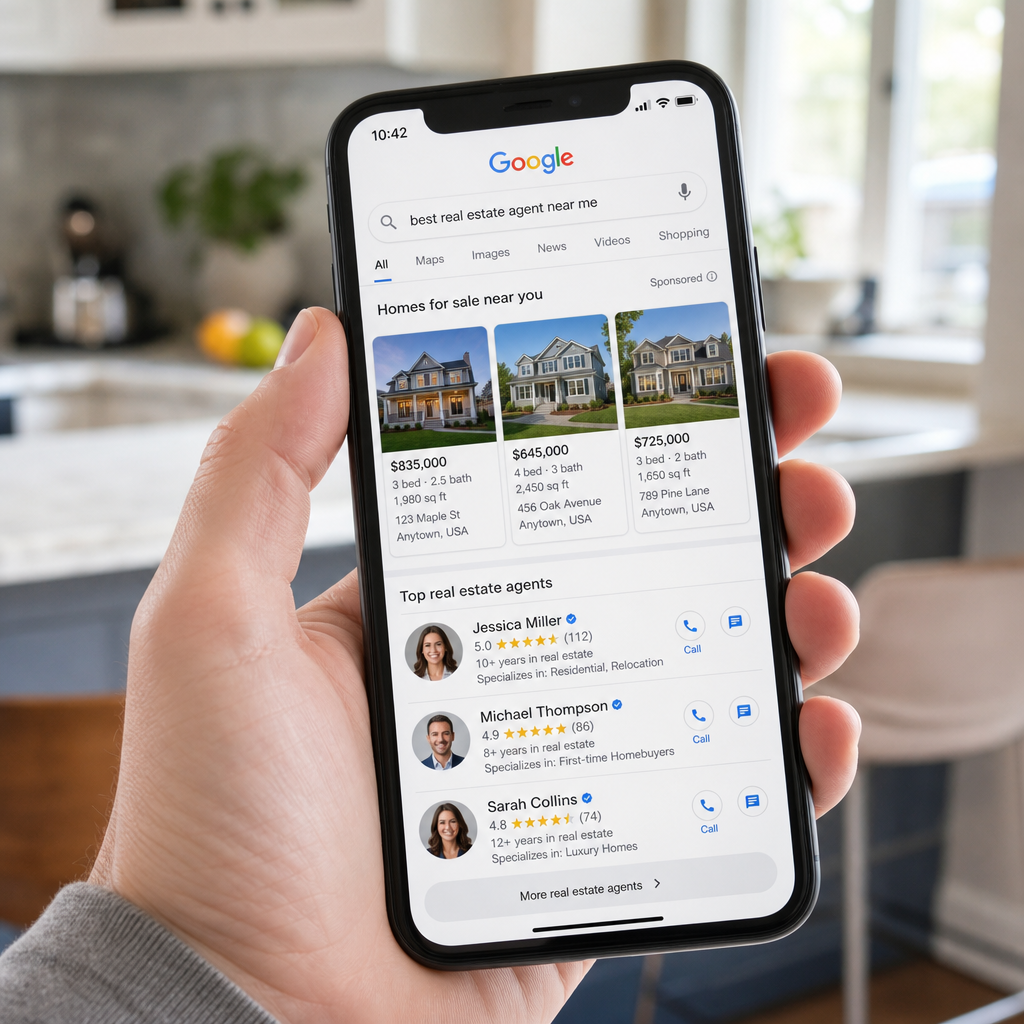
Australian real estate agents are bleeding listings to competitors who figured out one thing earlier: sellers research agents online before they call anyone. If your agency does not appear in Google search results when a homeowner types “best real estate agent in [suburb]” or “how much is my home worth,” you simply do not exist to that seller. Google Ads for real estate agents Australia is no longer a nice-to-have marketing experiment. It is the mechanism that puts your name in front of motivated sellers at the exact moment they are ready to act, and the agents skipping it are handing listings to their rivals every single week.
Table of Contents
- Quick Takeaways
- The Listing Problem No One Talks About
- How Sellers Actually Find Agents in Australia
- What Google Ads Does That realestate.com.au Cannot
- Real Estate Seller Leads Google Ads: The Campaign Types That Work
- Affordable Google Ads Management Australia: What It Actually Costs
- Real Estate Market Share Google Ads: Owning Your Suburb
- Comparison: Google Ads vs Other Lead Generation Channels
- Common Mistakes Real Estate Agents Make With Google Ads
- Frequently Asked Questions
- References
Quick Takeaways
| Key Insight | Explanation |
|---|---|
| Sellers search before they call | Over 80% of Australian property sellers research agents online before making first contact. If your agency is not in Google’s top results, you are excluded before the conversation starts. |
| Search intent is more valuable than reach | Google Ads targets people actively searching for appraisals and agents. This is fundamentally different from social media ads that interrupt passive scrollers. |
| Real estate seller leads from Google Ads convert faster | Because the searcher already has a need, lead-to-appraisal conversion rates from Google Search campaigns consistently outperform portal leads in practice. |
| Suburb-level targeting wins market share | Google Ads allows exact geographic targeting by suburb or postcode, letting smaller agencies dominate specific areas without competing nationally on budget. |
| Affordable management starts at $99/month | Professional Google Ads management for real estate agencies in Australia does not require a $2,000/month agency retainer. Specialist providers like Aus Promotion run full campaigns from $99/month. |
| Remarketing closes the gap on warm leads | Most sellers visit multiple agent websites before deciding. Remarketing campaigns keep your agency visible to those who showed interest but did not yet enquire. |
| Not running ads is a passive decision to lose market share | Every suburb has a finite number of listing opportunities. When competitors run Google Ads and you do not, they capture those appraisals by default. |
The Listing Problem No One Talks About
Most real estate principals blame a slow market when listings dry up. The data tells a different story. The problem is usually not the market. It is visibility at the moment a seller decides to move.
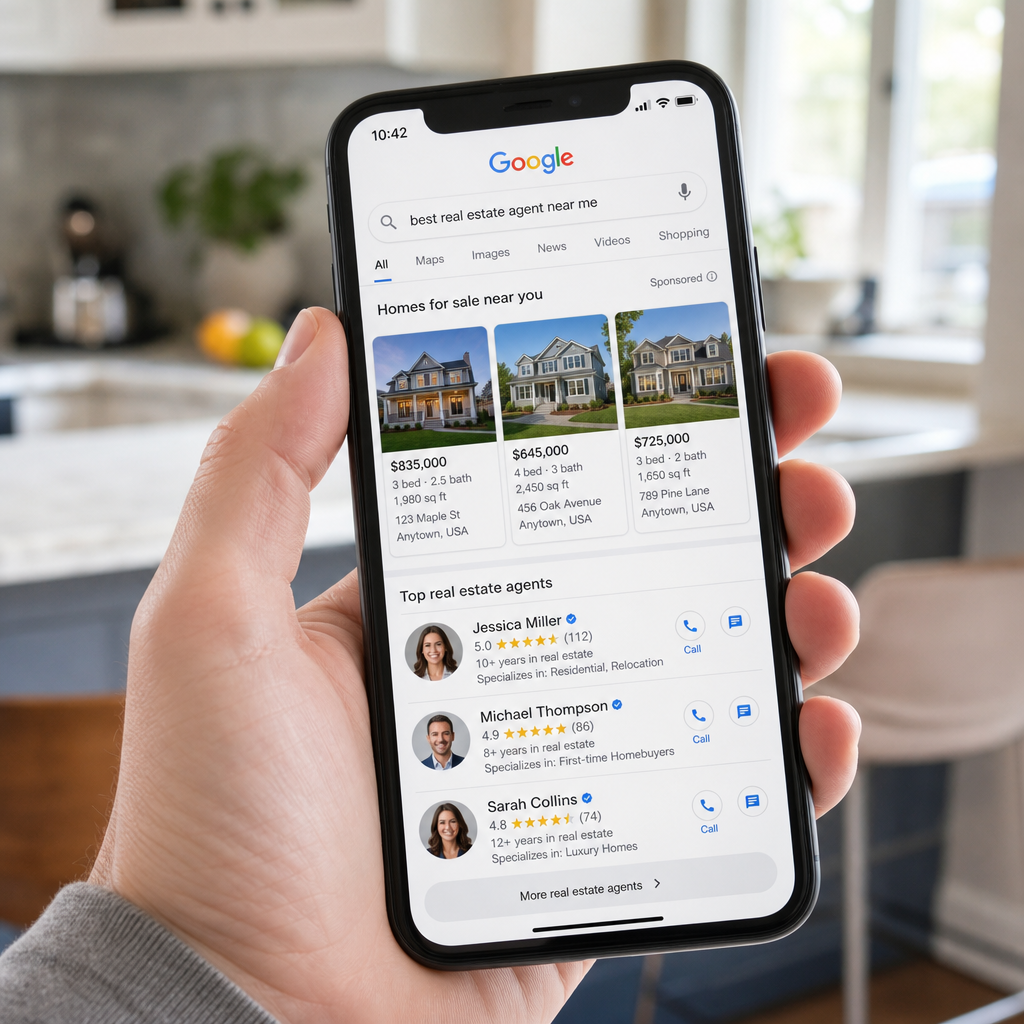
A homeowner in Parramatta, Geelong, or Christchurch who is thinking about selling does not open a filing cabinet to find an agent’s business card. They open Google. They type something like “real estate agent near me,” “property appraisal [suburb name],” or “how much is my house worth 2024.” What appears in those results determines who gets called and who does not.
In practice, agencies that rely solely on letterbox drops, word of mouth, and their realestate.com.au profile are competing for sellers who are already deep in the decision process. Google Ads for real estate agents Australia captures sellers at the very beginning of that process, before they have formed preferences. That early visibility is what translates into a full appraisal pipeline.
How Sellers Actually Find Agents in Australia
According to research published by the Australian Communications and Media Authority, Australians conduct an average of more than 5 billion Google searches per month. Real estate-related searches form a significant portion of that volume, particularly searches tied to local suburbs and property-specific questions.
The typical seller journey in Australia looks like this. A homeowner starts thinking about selling 3 to 6 months before they actually list. They begin with broad questions such as “should I sell now” or “property prices in [suburb].” Over time, those searches become more specific: “best real estate agent in [suburb],” “free property appraisal [suburb],” and finally, “contact [agent name].”
“Search advertising reaches people at the moment they are looking to take action. That intent signal is worth more than any demographic targeting available on any other platform.” – Google Economic Impact Report, Google Australia
The problem for agents who are not running Google Ads is that they are invisible during the first 80% of that seller journey. By the time the seller is at the point of calling agents, they already have mental shortlists formed by what appeared in their previous searches. If you were not showing up in those early searches, you probably are not on that shortlist.
Why Organic Rankings Alone Are Not Enough
Some agents rely on SEO and their realestate.com.au or domain.com.au profiles for organic visibility. This works for branded searches, meaning people who already know your agency name. But it does almost nothing for capturing sellers who are searching for agents generically.
Google’s search results pages for high-intent real estate queries are dominated by paid ads at the top, followed by Google Maps listings, followed by portal pages like realestate.com.au. Organic website rankings for most small to mid-sized agencies appear far down the page, below the fold, and often on page two. Paid search ads appear first, every time, for the keywords that matter most to listing acquisition.
What Google Ads Does That realestate.com.au Cannot
Portal advertising on realestate.com.au and domain.com.au is built for buyer leads. You pay to feature your listings, and buyers contact you about those properties. That model does nothing for seller lead generation because sellers are not browsing portals to find agents. They are using Google.
Google Ads lets you intercept a seller who has just typed “property appraisal Bondi” and send them directly to a dedicated landing page where they can book an appraisal with your agency. The seller never sees your competitors’ listings. They see your offer, your credentials, and your call to action. That is a fundamentally different commercial opportunity than portal advertising.
Targeting Control You Cannot Get Anywhere Else
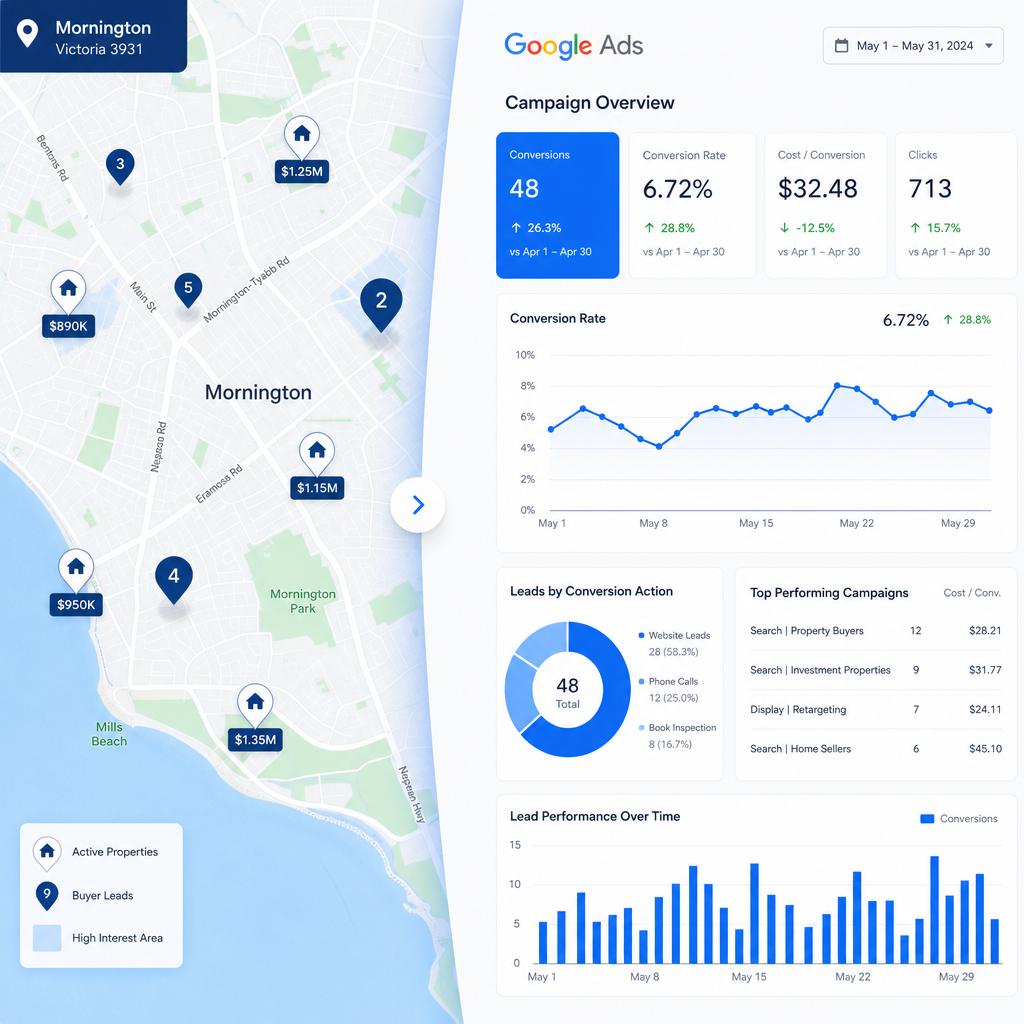
Google Search campaigns give real estate agencies precise control over which search queries trigger your ad. You can bid on exact suburb names, competitor agent names, property valuation terms, and home-selling intent phrases. You can exclude searches from buyers, tenants, and irrelevant adjacent markets so your budget only reaches potential sellers.
Display ads and YouTube ads extend that reach visually, showing your brand to people who visited your website, visited competitor websites, or match the demographic and geographic profile of your typical seller client. This creates multiple touchpoints across a seller’s research period, which is exactly how market share is built.
Pro tip: Set up a dedicated Google Ads landing page for seller appraisal requests rather than sending ad traffic to your homepage. A focused page with a single clear call to action (“Book a Free Appraisal”) converts at 3 to 5 times the rate of a generic homepage.
Real Estate Seller Leads Google Ads: The Campaign Types That Work
Not all Google Ads campaign types perform equally for real estate seller leads Google Ads. In practice, three campaign structures deliver the most consistent results for Australian real estate agencies.
Search Campaigns for High-Intent Appraisal Queries
Search campaigns are the foundation. These ads appear when someone actively searches for terms like “free property appraisal [suburb],” “sell my house [suburb],” or “best real estate agent [suburb].” The conversion rate from these searches is high because the intent is explicit. Someone typing that phrase is not browsing. They are ready to talk to an agent.
A well-structured search campaign for a real estate agency should include tightly themed ad groups around: appraisal requests, agent comparison searches, home valuation queries, and suburb-specific searches. Each ad group should have its own dedicated landing page that matches the search intent exactly.
Remarketing Campaigns for Warm Leads
Most sellers who land on your website for the first time do not enquire immediately. They leave and continue researching. Remarketing campaigns track those visitors using a website pixel and show your agency’s display ads to them across millions of websites in Google’s Display Network for the following weeks.
This repeated exposure builds familiarity and trust during the seller’s consideration phase. The data consistently shows that leads who convert after seeing remarketing ads are higher-quality leads because they have seen your brand multiple times before contacting you. They arrive warmer and closer to making a decision.
Display Campaigns for Brand Presence in Target Suburbs
Display advertising lets you show visual banner ads to households in specific suburbs, even before they start actively searching. You can target by suburb, postcode, and even household income bracket. This is the closest digital equivalent to a premium letterbox campaign, but with measurable performance data and the ability to stop and adjust instantly.

Affordable Google Ads Management Australia: What It Actually Costs
One of the most persistent myths in the real estate industry is that Google Ads requires a massive budget. This is simply not true for most suburban Australian markets. Affordable Google Ads management Australia is available, and for most regional and suburban agencies, the cost per lead from Google Ads is lower than what they pay per lead from portal advertising or letterbox campaigns.
The actual cost structure for a real estate Google Ads campaign has two components: the ad spend (money paid directly to Google for clicks) and the management fee (paid to whoever sets up and optimizes your campaigns). Many large digital agencies charge $1,500 to $3,000 per month in management fees alone, before a single dollar reaches Google. That pricing model is built for enterprise businesses, not suburban real estate agencies.
Aus Promotion offers professional Google Ads campaign setup and optimization from $99 per month, which means real estate agencies can access search, display, and remarketing campaigns with full professional management at a price point that makes commercial sense even in quieter markets. The ad spend budget is set separately based on the competitiveness of the target suburbs, and agents maintain full control and transparency over what is being spent.
Pro tip: In most Australian suburban markets, a monthly Google Ads spend of $500 to $1,500 is enough to generate a consistent flow of seller appraisal enquiries when campaigns are structured correctly around high-intent keywords. The key is not budget size. It is targeting precision and landing page quality.
Real Estate Market Share Google Ads: Owning Your Suburb
Real estate is a local business. Market share in a suburb is determined by which agency name sellers recognize and trust when they decide to list. Google Ads directly influences that recognition by placing your brand consistently in front of homeowners in your target suburbs over weeks and months, not just at the moment they search.
The agents and agencies building real estate market share Google Ads are treating their campaigns as ongoing brand-building exercises, not one-off experiments. They run search campaigns to capture active sellers, display campaigns to build recognition among future sellers, and remarketing campaigns to stay visible to anyone who showed interest but has not yet committed.
Suburb Domination Is a Realistic Goal for Small Agencies
A common mistake is assuming you need a franchise-level marketing budget to compete on Google. In practice, a single agent or small agency can dominate Google search results in a specific suburb with a modest, well-managed budget because the competitive field is often surprisingly thin.
Many real estate agencies in Australia have still not invested in paid search. That means the cost per click for suburb-specific real estate keywords remains far lower than in industries like finance or insurance. An agency willing to invest consistently in Google Ads right now can establish dominant search presence in their target suburbs before the window closes and costs rise as more competitors enter the space.
Comparison: Google Ads vs Other Lead Generation Channels
| Channel | Seller Lead Quality | Cost Control and Transparency |
|---|---|---|
| Google Search Ads | High. Captures sellers with explicit intent at the moment they search for appraisals or agents. Leads arrive with a defined need. | Full control. You set the daily and monthly budget cap. You see exactly which keywords triggered the ad and what each click cost. |
| realestate.com.au / domain.com.au portal advertising | Primarily buyer-focused. Seller leads are indirect and depend on sellers browsing for comparable properties or agent profiles. Lower intent signal. | Limited. Portal packages are priced by the portal, not by your performance. You pay whether or not the spend generates enquiries. |
| Facebook and Instagram Ads | Medium. Can generate seller leads through appraisal offer campaigns but the audience is passive. Intent is absent. Requires higher lead volume to find genuinely motivated sellers. | Good budget control but conversion rates from social to seller appraisal are typically lower than search. Works best as a supplement to Google Ads, not a replacement. |
Common Mistakes Real Estate Agents Make With Google Ads
Most real estate agencies that have tried Google Ads and dismissed it as “not working” made the same structural errors. Understanding these mistakes is what separates campaigns that generate consistent appraisal bookings from ones that burn budget with nothing to show.
Sending Ad Traffic to a Homepage
A homepage is designed to serve all audiences: buyers, sellers, landlords, tenants. When a motivated seller clicks a Google Ad and lands on a page cluttered with property listings and general information, they do not see themselves or their need reflected. They leave. The fix is a dedicated appraisal landing page that speaks only to sellers and contains only one action: booking an appraisal.
Using Broad Match Keywords Without Negatives
A common mistake is setting up Google Search campaigns with broad match keywords like “real estate” or “property” without adding negative keywords to exclude irrelevant searches. This results in ads appearing for searches like “real estate investing,” “property management jobs,” or “buy a house,” which are completely outside the seller lead objective. Budget disappears on clicks that were never going to convert.
Running Campaigns Without Conversion Tracking
Without proper conversion tracking installed, there is no way to know which keywords, ads, or times of day are generating appraisal enquiries. Decisions get made on impression and click data alone, which is not enough. Setting up goal tracking in Google Ads, specifically tracking form submissions and phone call clicks from the landing page, is non-negotiable for any campaign that is being optimized for results.
Stopping Campaigns After 2 to 3 Weeks
Google Ads campaigns for real estate agent leads need 4 to 8 weeks of data before meaningful optimization can happen. Agencies that run a campaign for 2 weeks, see no immediate flood of listings, and switch it off have made a common but costly mistake. The algorithm needs time to learn which clicks convert. Remarketing audiences need time to build. Market share campaigns need consistency to create recognition. Patience and systematic optimization are what produce results, not short bursts.
Frequently Asked Questions
How much should a real estate agency spend on Google Ads in Australia?
For most suburban Australian markets, a monthly Google Ads budget of $500 to $1,500 in ad spend is sufficient to generate regular appraisal enquiries when campaigns are targeted to specific suburbs with high-intent keywords. Highly competitive markets like inner Sydney or Melbourne may require $2,000 or more per month. The management fee for professional campaign optimization is separate and can start from as little as $99/month with a specialist provider like Aus Promotion.
Can Google Ads generate seller leads specifically, not just buyer leads?
Yes, and this is one of Google Ads’ greatest strengths for real estate agencies. By targeting keywords that reflect seller intent, such as “free property appraisal,” “sell my house,” “home valuation [suburb],” and “real estate agent [suburb],” your ads are shown exclusively to people in seller mode. Negative keywords filter out buyer searches so budget is spent only on seller-relevant traffic.
How long does it take to see results from Google Ads for real estate?
Most real estate agencies start seeing appraisal enquiries within the first 2 to 4 weeks of a well-structured Google Ads campaign. The first month is largely a learning phase where the algorithm identifies which keywords and ad combinations generate the most conversions. Months 2 and 3 typically show significantly improved cost per lead as optimization takes effect. Treating Google Ads as a minimum 3-month commitment produces far better results than short-term testing.
Is Google Ads worth it for a small or single-agent real estate business?
Single agents and small agencies often see the best return on Google Ads because they are targeting a small, specific geographic area where competition is limited and cost per click is lower. A single agent who consistently captures 2 to 3 additional seller appraisals per month through Google Ads, and converts even one of those into a listing, will generate enough in commission to justify the campaign cost many times over. The math works strongly in favour of small operators in suburban and regional markets.
What is remarketing and why does it matter for real estate agents?
Remarketing means showing ads specifically to people who have already visited your website. In real estate, this is valuable because most sellers visit multiple agent websites over several weeks before choosing who to call. Remarketing keeps your agency’s brand visible during that consideration period, showing display ads to those warm visitors across the websites they browse. It is a cost-effective way to maintain presence with people who are already aware of you and close to making a decision.
Do I need a website to run Google Ads for real estate?
You need at minimum a dedicated landing page, though a full website is preferable. The landing page must clearly address the seller’s need (getting an appraisal), present your credentials and local expertise, and include a simple form or phone number for immediate contact. A poorly designed or generic page will waste the ad spend regardless of how good the campaign targeting is. Page quality and campaign quality must both be strong for results to follow.
If you are currently running Google Ads for your real estate business or have tried it in the past, share what worked or what held you back in the comments. Real-world experience from agents on the ground is invaluable for the whole industry.
References
- Statista: Digital advertising spend and search marketing statistics for the Australian market
- Forbes: How pay-per-click advertising generates leads for service-based businesses
- HubSpot Marketing Statistics: Lead generation benchmarks and conversion rate data across digital channels
- Ahrefs Blog: Search intent analysis and keyword research methodology for local service industries
- Moz Learn SEO: Understanding paid search vs organic search visibility for local businesses